Veterans’ Benefits 2026: A Comparison of the Latest Disability Compensation Rates and Application Process
Every year, millions of former service members rely on crucial financial updates to secure their livelihood, making the rollout of Veterans Benefits 2026 a pivotal moment.
Navigating the latest disability compensation adjustments can feel overwhelming, but staying informed ensures you receive the support you earned.
For those who defended our nation, keeping track of updated monthly payouts and modified filing procedures is essential. This guide breaks down the latest Department of Veterans Affairs changes, stripping away the bureaucratic red tape to give you clear, actionable data.
From projected cost-of-living increases to modernized claim processing timelines, the upcoming cycle introduces significant shifts. Here is what you need to know about the new VA assistance rates and how to navigate the updated application journey smoothly.
Understanding Veterans’ Benefits 2026: Key Changes Anticipated
The upcoming year, 2026, is expected to bring several adjustments to the structure and delivery of veterans’ benefits, particularly concerning disability compensation.
These changes are often influenced by economic forecasts, congressional directives, and ongoing efforts to improve service delivery within the VA.
Veterans and their advocates are closely watching for official announcements regarding the specifics of these adjustments.
Early indications suggest a continued focus on equitable compensation and a more efficient application system, aiming to reduce backlogs and improve veteran access.
These anticipated changes underscore the importance of proactive engagement and continuous monitoring of official VA communications. Veterans should prepare to adapt their understanding and, if necessary, their application strategies in response to these forthcoming updates.
Disability Compensation Rates in 2026: What to Expect
Disability compensation rates are a cornerstone of financial support for veterans with service-connected conditions.
For 2026, the primary factor influencing these rates will likely be the annual Cost-of-Living Adjustment (COLA), which is tied to inflation and designed to maintain purchasing power.
While the exact COLA percentage for 2026 will not be finalized until late 2025, historical trends and current economic indicators offer some insight.
Veterans can anticipate an adjustment that reflects the broader economic climate, ensuring their benefits keep pace with the cost of living.
Beyond the COLA, other legislative actions could also impact specific rate schedules or introduce new benefit categories. It is vital for veterans to consult official VA resources for the definitive rates once they are formally announced.
Projected COLA and Its Impact
The annual COLA is determined by the Social Security Administration and typically applies to various federal benefits, including VA disability compensation. This adjustment helps ensure that the financial support provided to veterans does not erode due to inflation.
Veterans with higher disability ratings or specific dependency statuses often see a more significant monetary increase from COLA. This is because the percentage adjustment is applied to their base compensation amount, making accurate disability ratings even more critical.
- COLA is tied to the Consumer Price Index for Urban Wage Earners and Clerical Workers (CPI-W).
- Official COLA announcements usually occur in October of the preceding year.
- The adjustment aims to preserve the purchasing power of veterans’ benefits.
Special Monthly Compensation (SMC) Considerations
Special Monthly Compensation (SMC) provides additional benefits for veterans with specific severe disabilities or combinations of disabilities. For 2026, the rates for SMC are also subject to the annual COLA, ensuring these specialized benefits maintain their value.
Veterans receiving SMC should monitor the same COLA announcements as those receiving standard disability compensation. The complex nature of SMC often requires detailed evaluation, and any changes in criteria or rates will be communicated by the VA.
Understanding the nuances of SMC is crucial for eligible veterans, as these benefits can significantly enhance their financial stability. The VA continually reviews these specialized compensation categories to ensure they adequately address severe service-connected conditions.
The Application Process for Veterans’ Benefits 2026: Streamlining Efforts
The application process for Veterans Benefits 2026 is an area where the VA has consistently sought improvements. Efforts to streamline and simplify the application journey are ongoing, with 2026 likely seeing further enhancements.
The goal is to make the process more accessible and less daunting for veterans, reducing the time it takes to receive a decision. Digitalization and improved online tools are central to these modernization efforts, reflecting a broader shift towards efficient government services.
Veterans are encouraged to utilize all available resources, including accredited Veterans Service Officers (VSOs), to navigate the application process effectively. These resources are designed to provide expert guidance and support, minimizing potential hurdles.
Digitalization and Online Tools
The VA continues to invest heavily in digital platforms to facilitate the application process. The VA.gov website serves as a central hub for submitting claims, tracking progress, and accessing information, and its capabilities are expected to expand further by 2026.
These online tools are designed to reduce paperwork, accelerate submission times, and provide greater transparency for applicants. Veterans can often upload supporting documents, communicate with their claims processors, and receive status updates directly through these digital channels.
- VA.gov offers a streamlined portal for submitting new claims and managing existing ones.
- Digital submission can often lead to faster processing compared to traditional mail.
- Online resources provide comprehensive guides and FAQs for common application questions.
Role of Veterans Service Organizations (VSOs)
Veterans Service Organizations (VSOs) play an indispensable role in assisting veterans with their benefit claims. These organizations provide free, professional guidance, helping veterans gather necessary documentation, complete forms, and appeal unfavorable decisions.
For Veterans Benefits 2026, the expertise of VSOs will remain invaluable. Their deep understanding of VA regulations and procedures can significantly improve a veteran’s chances of a successful claim.
Engaging with an accredited VSO early in the application process is highly recommended. These professionals act as advocates, ensuring that all necessary information is presented clearly and accurately to the VA.
Eligibility Criteria and Documentation for 2026
Understanding the eligibility criteria and required documentation is foundational for successfully applying for Veterans Benefits 2026. While core requirements remain consistent, minor adjustments or clarifications can occur.
Service-connected disability remains the primary criterion for VA disability compensation. This means a veteran’s illness or injury must be linked to their military service, either having occurred during service, been aggravated by service, or developed after service due to service-related events.
Comprehensive documentation, including service medical records, private medical records, and lay statements, is essential for substantiating a claim. The VA emphasizes the importance of submitting a fully developed claim to expedite processing.
Service-Connected Disability: Proving the Link
Establishing a service connection is often the most critical aspect of a disability claim. Veterans must provide evidence demonstrating a clear link between their military service and their current medical condition. This can involve medical opinions, service records, and personal statements.
The VA employs specific criteria to evaluate service connection, including direct service connection, presumptive service connection, and secondary service connection. Understanding which category applies to a veteran’s condition can help in structuring the claim.
Veterans should meticulously gather all relevant medical evidence, even for conditions that seem minor at first. Over time, seemingly minor issues can worsen, and having a documented service connection from the outset is advantageous.
Comparison of Rates: Historical Context and Future Projections
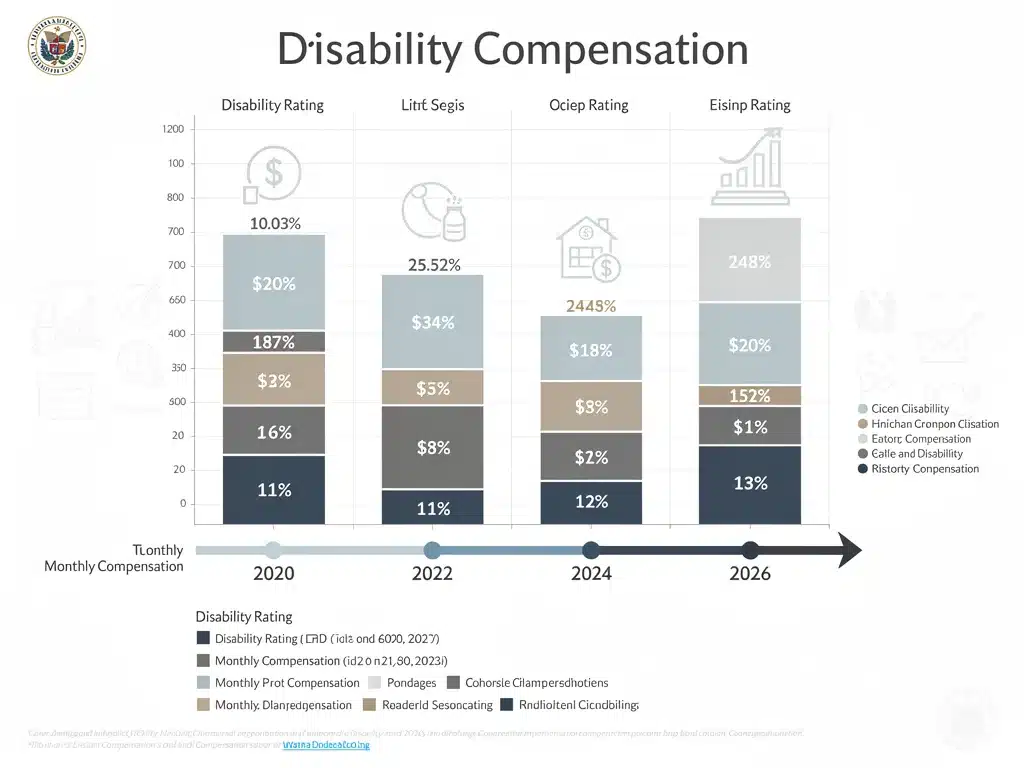
A comparison of historical disability compensation rates with future projections for Veterans Benefits 2026 offers valuable context. Rates have generally seen annual increases, primarily due to COLAs, reflecting ongoing economic shifts.
Examining past rate adjustments can provide an informed perspective on what veterans might expect in 2026. While inflation rates fluctuate, the commitment to aligning benefits with economic realities remains a constant focus for the VA and Congress.
This historical perspective helps veterans understand the long-term stability and growth of their benefits, reinforcing the importance of securing their entitled compensation.
Evolution of Compensation Rates Over Time
Over the past decade, VA disability compensation rates have steadily increased, largely driven by consistent COLA adjustments. These annual increments ensure that veterans’ financial support keeps pace with the rising cost of goods and services across the United States.
Beyond COLA, legislative initiatives occasionally introduce specific rate changes for certain conditions or expand eligibility for various benefits. These targeted adjustments reflect evolving medical understanding and societal recognition of veterans’ needs.
Veterans can review past rate tables on the VA website to observe these trends and gain a better understanding of how their benefits have evolved. This historical data provides a solid foundation for anticipating future rate structures.
Challenges and Solutions in the Application Process for 2026
Despite ongoing improvements, veterans may still encounter challenges when navigating the application process for Veterans Benefits 2026. Common hurdles include complex paperwork, long processing times, and difficulty in obtaining necessary medical evidence.
The VA is actively addressing these challenges through technological advancements, increased staffing, and partnerships with VSOs. The goal is to create a more responsive and less bureaucratic system for all applicants.
Veterans are advised to proactively seek assistance from VSOs, utilize online resources, and maintain organized records to mitigate potential difficulties. Persistence and thorough preparation are key to overcoming these obstacles.
Addressing Processing Delays
Processing delays have historically been a significant concern for veterans filing claims. While the VA has made strides in reducing backlogs, complex cases or periods of high application volume can still lead to extended waiting times.
The VA is implementing advanced case management systems and increasing its claims processing workforce to tackle these delays. Furthermore, the push for digital submissions and fully developed claims is intended to expedite the review process.
Veterans can help minimize delays by ensuring their applications are complete, accurate, and supported by all required documentation at the initial submission. Regular follow-ups through official channels can also be beneficial.
Future Outlook for Veterans’ Benefits Beyond 2026
The outlook for Veterans Benefits 2026 extends beyond the immediate year. Continuous legislative reviews and policy debates are expected to shape the future of veterans’ support in the United States.
Discussions often revolve around expanding healthcare access, addressing mental health needs, and refining disability compensation criteria to better serve the evolving needs of the veteran community. These ongoing conversations highlight a dynamic and responsive system.
Veterans should remain engaged with veterans’ advocacy groups and official VA channels to stay informed about potential long-term changes. Active participation in these discussions can also influence future policy decisions.
Legislative Landscape and Advocacy Efforts
The legislative landscape surrounding veterans’ benefits is constantly in motion, with various bills and proposals regularly introduced in Congress. These legislative efforts aim to enhance, expand, or modify existing benefits, often driven by veteran advocacy groups.
Organizations such as the American Legion, Veterans of Foreign Wars (VFW), and Disabled American Veterans (DAV) play crucial roles in lobbying for improvements to veterans’ benefits. Their advocacy ensures that veterans’ voices are heard in policy-making processes.
Staying informed about active legislative proposals can give veterans insight into potential future changes to their benefits. These efforts underscore a national commitment to supporting those who have served.
Maximizing Your Veterans’ Benefits in 2026
To maximize your Veterans Benefits 2026, a proactive and informed approach is essential. Understanding the intricacies of the system and utilizing available support can make a significant difference.
This includes staying updated on rate changes, understanding eligibility criteria, and meticulously preparing all necessary documentation for claims. The goal is to ensure that every veteran receives the full scope of benefits they are entitled to.
Engaging with VSOs and leveraging digital VA resources are critical steps in this process. These tools and support systems are designed to empower veterans to navigate the benefits landscape effectively.
Tips for a Successful Application
A successful application for VA disability compensation often hinges on thorough preparation and attention to detail. Veterans should begin by gathering all relevant medical records, both military and civilian, that document their service-connected condition.
Obtaining a current diagnosis and a medical opinion linking the condition to service is paramount. Lay statements from friends, family, or fellow service members can also provide valuable supporting evidence.
- Start gathering all medical and service records well in advance.
- Seek a current diagnosis and a medical nexus opinion from a qualified professional.
- Consider submitting a Fully Developed Claim (FDC) for faster processing.
| Key Aspect | Brief Description |
|---|---|
| Compensation Rates | Anticipated COLA adjustments for 2026, impacting all disability compensation levels. |
| Application Process | Continued VA efforts to streamline and digitize claims, reducing complexity and processing times. |
| Eligibility & Docs | Focus on service connection and comprehensive medical evidence for successful claims. |
| Support Resources | VSOs and VA.gov are crucial for guidance, advocacy, and navigating the benefits system. |
Frequently Asked Questions About Veterans’ Benefits 2026
The primary changes anticipated for Veterans’ Benefits 2026 include annual Cost-of-Living Adjustments (COLA) to disability compensation rates and continued efforts to streamline the application process through digitalization. Specific legislative changes could also introduce new benefits or modify existing ones, but these are subject to congressional approval.
Disability compensation rates for 2026 will primarily be adjusted by the Cost-of-Living Adjustment (COLA), which is based on the Consumer Price Index for Urban Wage Earners and Clerical Workers (CPI-W). The official COLA percentage is usually announced by the Social Security Administration in October of the preceding year, directly impacting VA benefits.
To prepare your application for Veterans’ Benefits 2026, gather all military and private medical records, obtain a current diagnosis for your service-connected condition, and ideally, a medical opinion linking it to your service. Utilizing an accredited Veterans Service Officer (VSO) can significantly aid in organizing and submitting a fully developed claim.
Yes, the VA continues to enhance its digital platforms, particularly VA.gov, to make the application process more efficient. Veterans can expect expanded online capabilities for submitting claims, uploading documents, tracking application status, and accessing comprehensive information, aiming to reduce paperwork and processing times significantly.
Reliable information on Veterans’ Benefits 2026 can be found on the official Department of Veterans Affairs (VA) website (VA.gov), through accredited Veterans Service Organizations (VSOs), and by consulting with VA regional offices. These sources provide the most accurate and up-to-date details on compensation rates, eligibility, and application procedures.
Looking Ahead
The continuous evolution of Veterans Benefits 2026 signifies an ongoing commitment to supporting those who have served. Veterans must stay informed about these developments, leveraging official channels and advocacy groups for accurate information.
Proactive engagement with the VA system and its resources will ensure that veterans can effectively navigate changes and secure the benefits they rightfully deserve, fostering long-term financial stability and well-being.