Space Race 2.0: 2026 Missions & US Tech Advancement Analysis
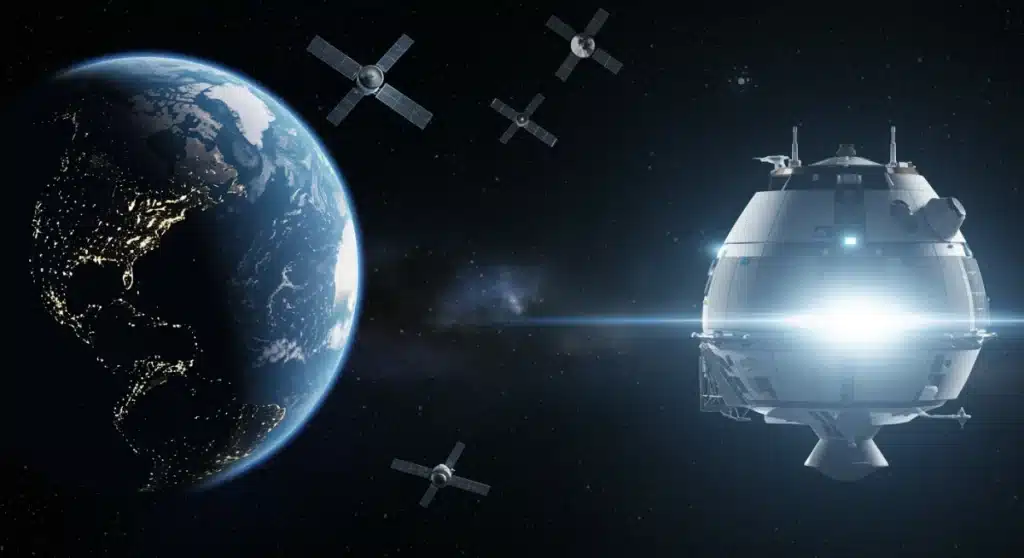
As we move into 2026, the global Space Race has shifted from a mere reach for the stars into a high-stakes sprint for orbital supremacy. This new era of cosmic competition is driving a massive surge in US private-sector innovation and strategic government initiatives.
Upcoming lunar and deep-space missions are now the primary engines for American breakthroughs in robotics, AI, and propulsion systems. These celestial voyages serve as rigorous testing grounds, ensuring that domestic aerospace capabilities remain at the cutting edge of global exploration.
Our analysis compares these pivotal milestones to evaluate their impact on the nation’s technological trajectory and long-term security. By examining these frontier efforts, we uncover the critical opportunities that will define leadership in the burgeoning exo-atmospheric economy.
The Evolving Landscape of Space Race 2.0
The current iteration of the space race, often referred to as Space Race 2.0, is fundamentally different from its Cold War predecessor.
While the original race was primarily a bilateral contest between the US and the Soviet Union, today’s arena features a multitude of state and private actors, each bringing unique capabilities and ambitions to the fore.
This expanded participation has fostered an environment of both intense competition and strategic partnerships, particularly concerning resource utilization and scientific collaboration.
The sheer volume of planned missions for 2026 underscores the accelerating pace of this new era, demanding constant innovation and adaptability from all participants, including the United States.
For US technological advancement, this evolving landscape presents a dual challenge: to innovate rapidly enough to maintain a competitive edge, while also identifying and leveraging opportunities for international collaboration that can accelerate shared goals.
The balance between these two approaches will be critical for shaping the future of space exploration.
Key Players and Their 2026 Objectives
Several nations and private entities are driving the momentum of Space Race 2.0 US Tech. China, with its ambitious Chang’e lunar program and Tiangong space station, continues to demonstrate significant capabilities, aiming for a permanent lunar base by the 2030s.
Europe, through ESA, is focusing on deep-space exploration and advanced satellite technologies, often in partnership with NASA.
India’s ISRO is steadily advancing its lunar and Mars missions, showcasing cost-effective innovation, while Japan’s JAXA emphasizes precision landing and sample return missions.
Private companies like SpaceX, Blue Origin, and United Launch Alliance are revolutionizing launch capabilities and pushing for commercial space infrastructure, fundamentally altering the access to space for all nations.
These diverse objectives highlight a multifaceted approach to space, moving beyond flag-planting to encompass resource extraction, scientific research, and the establishment of sustainable human presence.
Each player’s success or failure will inevitably ripple through the global space community, directly influencing the strategic calculations of the US.
- China: Lunar sample returns, robotic lunar base development, and expansion of Tiangong orbital capabilities.
- Europe (ESA): Deep-space astronomy missions, Earth observation satellites, and contributions to international lunar gateways.
- India (ISRO): Continued lunar exploration with Chandrayaan missions and development of human spaceflight capabilities.
- Japan (JAXA): Advanced planetary probes, asteroid sample returns, and innovative propulsion system testing.
US Strategic Response and Technological Imperatives

The US response to Space Race 2.0 US Tech is multifaceted, involving government agencies like NASA, the Department of Defense, and a robust private sector.
NASA’s Artemis program aims to return humans to the Moon by 2026, establishing a sustainable presence as a stepping stone to Mars. This program is a direct answer to the intensifying international competition.
Crucially, Artemis is designed with international partnerships at its core, inviting other nations to contribute to a shared vision of lunar exploration.
This strategy acknowledges that global challenges in space are best addressed through collaboration, while still asserting US leadership in critical technological domains. The program’s success is vital for maintaining American prestige and innovation.
Beyond NASA, the US military is increasingly focused on space-based assets for national security, driving advancements in satellite resilience, space domain awareness, and orbital debris mitigation.
This dual-use approach to space technology ensures that advancements serve both scientific exploration and strategic defense, amplifying the impact on US technological advancement.
Advancements in Propulsion Systems
Next-generation propulsion is a cornerstone of future space missions and a key area for US technological advancement. Chemical propulsion, while mature, is being refined for greater efficiency and thrust-to-weight ratios.
However, the focus is increasingly shifting towards more advanced concepts that can drastically reduce transit times and increase payload capacity, critical for deep-space endeavors.
Electric propulsion systems, such as Hall thrusters and ion engines, offer high efficiency for long-duration missions, though with lower thrust.
Nuclear thermal propulsion (NTP) and nuclear electric propulsion (NEP) are being actively researched for their potential to enable rapid transit to Mars, dramatically cutting mission times and radiation exposure for astronauts. These technologies represent a significant leap.
The development of these advanced propulsion systems is not just about reaching destinations faster; it’s about enabling entirely new mission profiles and reducing the cost of access to deep space.
US investment in these areas is crucial for staying ahead in the Space Race 2.0 US Tech, providing a competitive edge in exploration and resource utilization.
- Electric Propulsion: Enhanced efficiency for long-duration interplanetary travel and satellite maneuvering.
- Nuclear Thermal Propulsion: Faster transit to Mars, reducing mission duration and crew exposure risks.
- Chemical Propulsion Refinements: Increased thrust and fuel efficiency for heavy-lift launch vehicles.
- Advanced Materials: Development of lighter, stronger components for engines and spacecraft.
Impact on US Technological Advancement
The demands of Space Race 2.0 are a powerful catalyst for US technological advancement across a myriad of sectors.
The need for robust, long-duration habitats on the Moon and Mars is fostering innovation in advanced manufacturing, including 3D printing with lunar regolith and self-assembling structures. These developments have direct terrestrial applications in construction and materials science.
Furthermore, the complex data processing required for deep-space communication and autonomous navigation is pushing the boundaries of artificial intelligence and machine learning.
From intelligent robotic systems for exploration to AI-driven mission control, these advancements are transferable to fields like logistics, healthcare, and urban planning, yielding broad societal benefits.
The stringent requirements for astronaut health and safety in extreme environments are also spurring breakthroughs in biotechnology, telemedicine, and life support systems.
These innovations, initially designed for space, often find their way back to Earth, improving quality of life and addressing critical challenges in remote medicine and environmental control.
This symbiotic relationship between space and terrestrial technology is a hallmark of the current era of space exploration.
Robotics and Autonomous Systems
Robotics and autonomous systems are at the forefront of US technological advancement in Space Race 2.0.
The ability to deploy intelligent robots for reconnaissance, construction, and maintenance on other celestial bodies is paramount, minimizing risk to human explorers and extending mission capabilities. These systems require sophisticated AI, advanced sensors, and robust mechanical design.
From rover missions on Mars to robotic arms on the International Space Station, autonomous systems are proving their worth.
Future missions will increasingly rely on swarms of small, interconnected robots to perform complex tasks, such as mineral prospecting, infrastructure assembly, and even self-repair. This push for autonomy fosters innovation in fields like computer vision, haptics, and human-robot interaction.
The development of these technologies not only serves space exploration but also has profound implications for terrestrial industries. Autonomous vehicles, precision agriculture, and advanced manufacturing all benefit from the breakthroughs achieved in space robotics.
The challenges of operating in harsh, remote environments drive solutions that are adaptable and resilient, further strengthening US technological leadership.
International Collaboration vs. Competition in 2026 Missions
The paradox of Space Race 2.0 US Tech lies in its simultaneous embrace of intense competition and vital collaboration. While nations vie for prestige and strategic advantage, the sheer scale and cost of deep-space missions often necessitate pooling resources and expertise.
The Artemis Accords, led by the US, exemplify this approach, establishing a framework for responsible lunar exploration based on shared principles.
These accords aim to foster peaceful and transparent cooperation, setting norms for resource utilization and safety protocols. However, not all nations have signed or fully endorsed the accords, highlighting ongoing geopolitical tensions that spill into the space domain.
China and Russia, for instance, are pursuing their own lunar research station initiative, presenting an alternative model of collaboration.
For US technological advancement, navigating this complex web of alliances and rivalries is crucial. Strategic partnerships can accelerate technological development and share financial burdens, while competition can spur innovation and ensure a diversity of approaches.
The optimal balance will depend on specific mission objectives and the evolving geopolitical landscape of 2026.
Data Security and Cyber Resilience in Space
As space infrastructure becomes increasingly critical for both civilian and military applications, data security and cyber resilience in space are paramount for US technological advancement.
Satellites and ground stations are vulnerable to cyberattacks, which could disrupt communication, navigation, and intelligence gathering. Protecting these assets is a growing priority for all spacefaring nations.
The development of quantum-resistant encryption, secure communication protocols, and robust anomaly detection systems for space assets is a significant area of research and investment.
The US is focused on creating resilient space architectures that can withstand sophisticated cyber threats, ensuring the integrity and availability of critical space-based services. This includes hardening both hardware and software against potential exploits.
Furthermore, the increasing reliance on commercial space services introduces new cybersecurity challenges, necessitating robust regulatory frameworks and industry best practices. The protection of intellectual property and sensitive mission data is also a key concern.
Innovations in space cybersecurity will have direct benefits for terrestrial network security, reinforcing the interconnectedness of technological progress on Earth and in orbit.
Economic Implications and Commercial Space Growth
The economic implications of Space Race 2.0 US Tech are profound, driving significant growth in the commercial space sector.
Private companies are no longer just service providers but are becoming primary innovators and operators, creating a dynamic ecosystem that complements government-led initiatives. This commercialization is lowering launch costs, increasing access to space, and fostering new industries.
From satellite constellations for global internet access to in-orbit manufacturing and space tourism, new markets are emerging rapidly. The US private sector, supported by government contracts and investments, is at the forefront of this commercial revolution.
This synergy between public and private entities is accelerating technological development and creating high-value jobs.
The prospect of lunar resource extraction, particularly water ice, represents a future economic frontier.
Developing the technologies for mining, processing, and utilizing these resources will create entirely new industries and supply chains, further boosting US technological advancement and economic prosperity. The foundation for these future markets is being laid now, with 2026 missions as key milestones.
Sustainability and Space Debris Mitigation
The sustainability of space operations is a growing concern, and efforts to mitigate space debris are crucial for the long-term viability of all missions.
The increasing number of satellites and launches associated with Space Race 2.0 US Tech unfortunately also increases the risk of orbital collisions, which can generate vast amounts of dangerous debris. Addressing this issue is a shared international responsibility.
US technological advancement is focusing on several solutions, including active debris removal technologies, such as robotic arms or nets to capture defunct satellites.
Furthermore, designing satellites with end-of-life de-orbiting capabilities and developing advanced space situational awareness systems to track and predict potential collisions are critical. These efforts are not just about environmental protection but also about ensuring continued access to space.
The development of sustainable space practices, including responsible launch and operational guidelines, is becoming a priority for both government agencies and private companies.
Innovations in this area, such as satellite servicing and on-orbit refueling, also open up new commercial opportunities while contributing to a cleaner and safer orbital environment.
The US is actively promoting international standards for space sustainability to protect this shared resource.
Ethical Considerations and Future Governance
As Space Race 2.0 US Tech accelerates, ethical considerations and the need for robust space governance become increasingly pressing.
Questions surrounding sovereignty over celestial bodies, the equitable distribution of space resources, and the protection of potential extraterrestrial life are moving from the realm of science fiction to immediate policy debates. The US, as a leading space power, plays a significant role in shaping these discussions.
The Outer Space Treaty of 1967 provides a foundational framework, but it predates many of the technological advancements and commercial aspirations of today.
New international agreements and norms are needed to address issues like space traffic management, planetary protection, and the responsible conduct of military activities in space. These discussions are complex, involving diverse national interests and legal interpretations.
For US technological advancement, engaging proactively in these governance discussions is essential. Developing technologies that align with ethical principles and promoting responsible behavior in space can enhance international trust and facilitate broader cooperation.
The future of space exploration depends not only on scientific and engineering prowess but also on a shared commitment to peaceful and sustainable practices.
Educational and Workforce Development Initiatives
To sustain its leadership in Space Race 2.0 US Tech, the United States must prioritize robust educational and workforce development initiatives. The demand for skilled engineers, scientists, technicians, and mission specialists is growing exponentially, requiring a continuous pipeline of talent.
Investing in STEM education from an early age is critical to inspiring the next generation of space innovators.
Universities and research institutions are playing a vital role in conducting cutting-edge research and training the future workforce. Programs focused on aerospace engineering, data science, robotics, and advanced manufacturing are directly contributing to the nation’s space capabilities.
Furthermore, vocational training and apprenticeships are essential for building the technical skills needed for manufacturing and operational roles.
Government and industry partnerships are also crucial for ensuring that educational programs align with the evolving needs of the space sector.
Internships, mentorships, and collaborative projects provide invaluable hands-on experience, preparing individuals for the challenges of space exploration. A strong and diverse workforce is the bedrock of sustained US technological advancement in this new space era.
| Key Aspect | Impact on US Tech |
|---|---|
| Advanced Propulsion | Drives innovation in nuclear and electric propulsion for faster, more efficient space travel. |
| Lunar Resource Utilization | Fosters breakthroughs in robotics, in-situ resource use, and sustainable off-world operations. |
| AI & Autonomy | Accelerates development of intelligent systems for exploration, manufacturing, and mission control. |
| International Cooperation | Shapes US policy, fosters shared innovation, and establishes norms for responsible space exploration. |
Frequently Asked Questions About Space Race 2.0 and US Tech
Space Race 2.0 describes the current era of intensified space exploration, marked by multiple state and private actors rather than a bilateral contest. It focuses on sustainable presence, resource utilization, and deep-space missions, unlike the original’s primary focus on national prestige and initial orbital/lunar milestones.
The 2026 missions will drive US innovation in areas like advanced propulsion, AI, robotics, life support systems, and material science. Competition and collaboration will push the boundaries of American engineering and scientific discovery, ensuring the US remains a leader in critical space technologies.
They are both. While nations like China pursue independent lunar programs, the US-led Artemis Accords promote international cooperation for peaceful lunar exploration. The US balances competitive innovation with strategic partnerships, leveraging collective expertise for complex and costly deep-space endeavors.
The private sector is a critical driver, revolutionizing launch capabilities and developing commercial space infrastructure. Companies like SpaceX and Blue Origin are not just service providers but key innovators, lowering costs and creating new markets, significantly contributing to overall US technological advancement.
Key challenges include maintaining technological leadership amidst global competition, securing funding for ambitious projects, attracting and retaining a skilled workforce, and addressing ethical and governance issues in space. Ensuring cyber resilience for space assets and mitigating space debris are also critical concerns.
Perspectives
The intensifying Space Race 2.0 US Tech, particularly with the critical 2026 international missions on the horizon, underscores a pivotal moment for American ingenuity.
The confluence of global ambition, technological breakthroughs, and geopolitical dynamics demands a proactive and adaptable strategy from the United States.
Maintaining leadership means not only pushing scientific boundaries but also fostering robust international partnerships and nurturing a new generation of innovators.
The advancements spurred by these missions will have far-reaching implications, extending beyond the space domain to influence terrestrial industries and everyday life. From advanced materials to artificial intelligence, the returns on investment in space exploration are manifold.
Therefore, continuous investment in research, development, and education remains paramount for securing US technological advancement and economic prosperity.
As we move towards 2026 and beyond, the narrative of space exploration will continue to evolve, shaped by both competition and cooperation.
The US’s ability to navigate this complex landscape, leveraging its strengths while embracing collaborative opportunities, will define its position in this new frontier. The future of American innovation is inextricably linked to its sustained commitment to space.