Navigating Generative AI Job Search: 3 Proven Strategies 2026

The job market is undergoing a massive shift, and standing out now requires a completely new playbook. Landing your dream role depends on how well you collaborate with Generative AI, the driving force reshaping modern recruitment. If you are still relying on old-school application methods, you risk falling behind.
Corporate hiring teams are rapidly deploying advanced machine learning algorithms and automated sourcing tools to filter applicants.
To beat the digital gatekeepers, your strategy must evolve alongside these intelligent platforms. It is no longer just about matching keywords; it is about proving you can thrive in an automated ecosystem.
This guide delivers three actionable, future-proof strategies designed to give you a definitive competitive edge.
By mastering these cutting-edge technologies, you will optimize your visibility and successfully navigate the modern workforce. Let’s dive into how you can make these sophisticated systems work for you, not against you.
Mastering AI-Optimized Resumes and Cover Letters
In the current job market, an applicant tracking system (ATS) often provides the first interaction with a candidate’s application. Generative AI tools are now enhancing these systems, making it imperative for job seekers to craft documents that resonate with both AI and human reviewers.
This requires a nuanced understanding of keyword optimization and contextual relevance.
Developing an AI-optimized resume involves more than just stuffing keywords; it means understanding the semantic connections AI makes between job descriptions and your qualifications.
Generative AI can analyze job postings to identify implicit skills and experiences that might not be immediately obvious. Crafting a compelling cover letter also benefits significantly from AI assistance.
The goal is to create application materials that not only pass initial AI screenings but also present a coherent and persuasive narrative to human hiring managers. This dual-optimization approach ensures maximum visibility and impact. It’s about leveraging technology to tell your story more effectively.
Leveraging Generative AI for Tailored Content
Generative AI platforms can analyze job descriptions and your professional history to suggest highly personalized content. This goes beyond simple keyword matching, focusing on tone, style, and the specific competencies highlighted by the employer.
The result is an application that feels uniquely crafted for each role, significantly increasing its chances of success.
By inputting your resume and a target job description into a generative AI tool, you can receive suggestions for rephrasing bullet points, adding relevant industry-specific terminology, and even structuring your experience to align with the employer’s needs.
This capability dramatically reduces the time spent on customization, allowing you to apply for more positions effectively. It’s a powerful method for Navigating Generative AI in Your Job Search.
Crafting Keyword-Rich and Contextually Relevant Documents
- Utilize AI tools to extract key skills and responsibilities from job descriptions.
- Incorporate synonyms and related terms that AI algorithms recognize as relevant.
- Ensure a balanced density of keywords to avoid appearing spammy to AI and human readers.
- Structure your resume and cover letter logically for easy AI parsing and human readability.
The strategic use of keywords is paramount for any job seeker in 2026. Generative AI models are sophisticated enough to understand context, meaning that simply listing keywords will not be as effective as integrating them naturally into your experience and achievements.
Focus on demonstrating how your skills align with the role’s demands.
Furthermore, ensure your documents are formatted clearly and consistently. AI systems can struggle with complex layouts or unusual fonts, potentially leading to misinterpretation of your qualifications.
A clean, professional design remains a best practice, facilitating both AI processing and human review.
This careful approach to document creation is a cornerstone for Navigating Generative AI in Your Job Search. It ensures your application is not just seen, but understood and valued by the technology and the people involved in the hiring process. This is a vital first step.
Acing AI-Powered Interviews and Assessments
As generative AI becomes more sophisticated, its role is expanding beyond initial application screening to encompass various stages of the interview process.
This includes AI-powered video interviews, automated coding challenges, and personality assessments designed to evaluate candidates more efficiently. Preparing for these new formats is essential for success.
Many companies are now utilizing AI to analyze facial expressions, vocal tone, and even word choice during video interviews to gauge a candidate’s confidence and suitability.
Understanding how these systems work and practicing with similar tools can provide a significant advantage. This represents a new frontier in interview preparation.
Furthermore, AI-driven assessments are increasingly used to evaluate technical skills and cognitive abilities.
These tools are designed to provide an objective measure of a candidate’s capabilities, reducing human bias. Candidates must familiarize themselves with these assessment types to perform optimally.
Practicing with AI Interview Simulators
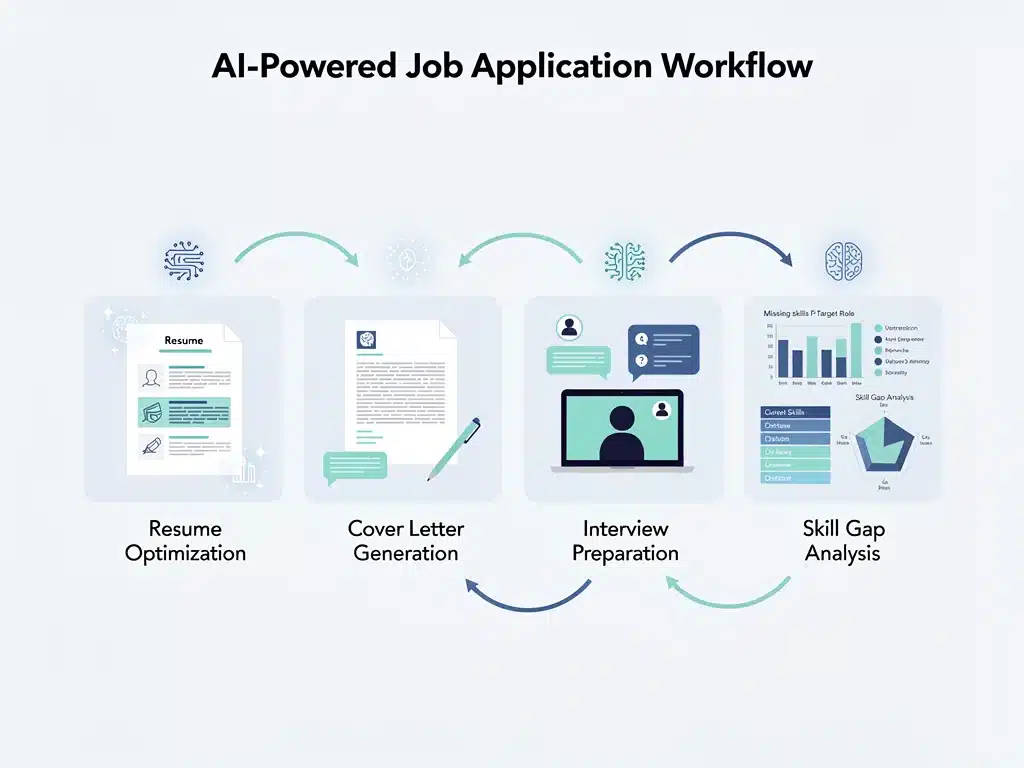
Several platforms now offer AI-powered interview simulators that mimic real-world scenarios. These tools use generative AI to ask common interview questions, analyze your responses, and provide instant feedback on aspects like clarity, confidence, and relevance.
Engaging with these simulators can significantly improve your performance in actual interviews.
By repeatedly practicing, you can refine your answers, improve your delivery, and become more comfortable with the format. This hands-on experience is invaluable for building confidence and reducing anxiety.
It allows you to identify areas for improvement before facing a real interviewer, making Navigating Generative AI in Your Job Search much smoother.
Understanding AI-Driven Skill Assessments
- Research the specific types of AI assessments used by target companies (e.g., coding challenges, psychometric tests).
- Utilize online resources and practice tests to familiarize yourself with the format and question types.
- Focus on developing problem-solving skills, as many AI assessments evaluate logical reasoning and critical thinking.
- Be aware of the time constraints and technical requirements of these assessments to avoid last-minute issues.
AI-driven skill assessments are designed to test your actual abilities rather than just what’s on your resume. This means a strong emphasis on practical problem-solving and critical thinking.
Preparing for these assessments often involves more than just reviewing theoretical knowledge; it requires active practice.
Many companies provide sample questions or practice environments for their AI assessments. Taking advantage of these resources is highly recommended.
It helps you understand the platform, the types of questions asked, and the expected response format, which is crucial for Navigating Generative AI in Your Job Search.
Ultimately, success in AI-powered interviews and assessments hinges on thorough preparation and a willingness to adapt to new evaluation methods. Treat these tools as opportunities to showcase your true potential rather than obstacles. This proactive approach will set you apart.
Leveraging AI for Skill Development and Networking
Beyond direct application processes, generative AI offers powerful tools for continuous skill development and strategic networking.
Identifying skill gaps, finding relevant learning resources, and even drafting networking messages can all be enhanced by AI. This holistic approach ensures you remain competitive and connected in the evolving job market.
AI platforms can analyze current industry trends and your existing skillset to recommend specific courses, certifications, or projects that will boost your employability. This personalized learning path helps you stay relevant. Staying current with in-demand skills is a continuous process.
Furthermore, generative AI can assist in building and maintaining professional relationships. It can suggest relevant contacts, help craft personalized outreach messages, and even prepare you for networking events. This strategic use of AI transforms how you approach career growth.
Personalized Skill Gap Analysis with AI
Generative AI tools can compare your resume and career goals against current industry demands and specific job descriptions to pinpoint skill gaps.
These tools can then recommend tailored learning paths, including online courses, workshops, or certifications, to help you acquire the necessary competencies. This personalized guidance is invaluable for career progression.
For instance, if you are targeting a role in data science, AI could identify that you lack proficiency in a specific programming language or machine learning framework.
It would then suggest reputable platforms like Coursera or edX for acquiring those skills. This targeted approach makes skill development highly efficient and effective for Navigating Generative AI in Your Job Search.
AI-Assisted Networking and Professional Growth
- Use AI to identify industry leaders and potential mentors based on your career interests.
- Employ generative AI to draft personalized introductory messages for networking outreach.
- Leverage AI to research companies and individuals before networking events, ensuring meaningful conversations.
- Stay updated on industry news and trends through AI-curated content to inform your professional discussions.
Networking remains a cornerstone of career advancement, and generative AI can make this process more strategic and less daunting.
By analyzing public professional profiles, AI can identify shared connections, common interests, or potential collaboration opportunities. This intelligence helps you approach networking with a clear purpose and a tailored message.
Moreover, AI can help you prepare for informational interviews by generating insightful questions or summarizing recent company news.
This ensures you make a strong impression and extract maximum value from every interaction. It’s an indispensable tool for Navigating Generative AI in Your Job Search.
The proactive use of AI for skill development and networking positions you as a forward-thinking professional. It demonstrates your commitment to continuous learning and adaptability, qualities highly valued by employers. Embrace these tools to continuously enhance your professional profile.
Ethical Considerations and Responsible AI Use
While the benefits of generative AI in job searching are undeniable, it is crucial to approach these tools with an understanding of ethical considerations and responsible use.
Over-reliance on AI without human oversight can lead to generic applications or even unintentional misrepresentation. Balancing AI assistance with personal authenticity is key.
Candidates must ensure that any AI-generated content accurately reflects their skills and experiences. Plagiarism or submitting entirely AI-written content without review can undermine your credibility. The goal is to augment your efforts, not replace your voice. This ethical stance is vital.
Furthermore, be aware of potential biases embedded within AI algorithms. While AI aims for objectivity, the data it trains on can sometimes reflect existing societal biases. Understanding these limitations helps you critically review AI suggestions and ensure fairness in your application process.
Maintaining Authenticity in AI-Enhanced Applications
Using generative AI to craft your resume or cover letter should be viewed as a collaborative process, not a complete handover.
Always review and edit AI-generated content to ensure it accurately reflects your unique voice, experiences, and professional brand. Your personal touch and genuine enthusiasm are irreplaceable.
Think of AI as a powerful writing assistant that helps you articulate your thoughts more clearly and effectively. It can refine language, suggest stronger action verbs, or optimize sentence structure.
However, the core message and the factual content must always originate from you. This balance is crucial for Navigating Generative AI in Your Job Search.
Addressing Potential AI Biases in the Job Search
- Be aware that AI algorithms can perpetuate biases present in historical hiring data.
- Critically review AI suggestions for any language or framing that might unintentionally disadvantage you.
- Focus on quantifiable achievements and objective metrics in your application to minimize subjective interpretation.
- Advocate for transparent AI practices in recruitment where possible, contributing to a fairer hiring ecosystem.
The issue of AI bias is a significant concern in recruitment. Algorithms trained on past hiring data might inadvertently favor certain demographics or profiles, even if unintended.
As a job seeker, being aware of these potential biases allows you to proactively address them in your application materials. It’s about ensuring your qualifications are judged fairly.
When using AI tools, consider generating multiple versions of your content and comparing them for potential bias. Adjust language to be inclusive and focus on universal skills and achievements.
This conscious effort contributes to a more equitable job search experience, embodying responsible practices for Navigating Generative AI in Your Job Search.
Ultimately, responsible AI use in your job search involves critical thinking, ethical awareness, and a commitment to authenticity. These principles ensure that while you leverage cutting-edge technology, you also uphold your professional integrity. This balanced approach will serve you well.
Future-Proofing Your Career with AI Competency
The rapid evolution of generative AI means that proficiency in these tools will soon become a fundamental requirement across many industries.
Developing a strong understanding of AI’s capabilities and limitations, not just as a user but as a critical thinker, is essential for future-proofing your career. This goes beyond simply knowing how to use a specific AI application.
Employers are increasingly seeking candidates who can not only adapt to new technologies but also contribute to their strategic implementation.
Demonstrating your AI competency, whether through projects, certifications, or thoughtful discussions, will be a significant differentiator. It shows you are prepared for the future of work.
This involves continuous learning and staying abreast of the latest advancements in AI. The landscape is dynamic, with new tools and applications emerging constantly.
A proactive approach to learning will ensure your skills remain relevant and in demand, providing a clear path for Navigating Generative AI in Your Job Search.

Integrating AI Tools into Daily Workflow
Beyond job search specific applications, integrate generative AI tools into your daily professional workflow. Use them for research, content creation, data analysis, or even project management.
This hands-on experience builds practical skills and demonstrates your comfort with advanced technology. It’s about making AI a natural extension of your capabilities.
Document how you leverage these tools to enhance productivity or solve complex problems. These real-world examples can be powerful additions to your resume and interview discussions.
They showcase your ability to apply AI effectively in a professional setting, which is highly valued by employers when Navigating Generative AI in Your Job Search.
Showcasing AI Literacy in Your Professional Brand
- Include specific examples of how you’ve used generative AI to achieve professional goals in your portfolio or LinkedIn profile.
- Consider obtaining certifications in AI tools or concepts to validate your skills.
- Actively participate in discussions about AI’s impact on your industry, demonstrating thought leadership.
- Highlight your ability to adapt to new technologies and learn quickly in cover letters and interviews.
Your professional brand should reflect your AI literacy. This means not just mentioning AI on your resume, but providing tangible evidence of your proficiency.
Case studies, project summaries, or even blog posts demonstrating your understanding and application of AI can significantly boost your profile. It’s about demonstrating value.
Engaging with the broader AI community, attending webinars, or contributing to open-source projects can further enhance your visibility and credibility.
These activities position you as an informed and proactive professional, ready for the challenges and opportunities presented by AI. This is a crucial element for Navigating Generative AI in Your Job Search.
By consciously building and showcasing your AI competency, you not only improve your immediate job search prospects but also establish a foundation for long-term career success.
This proactive engagement with technology is a hallmark of future-ready professionals. It’s a continuous investment in your professional self.
The Evolving Role of Human Oversight in AI Recruitment
Despite the growing influence of generative AI in recruitment, human oversight remains a critical component. AI tools are designed to assist and streamline, not entirely replace, human judgment.
Recruiters and hiring managers still make the ultimate decisions, often relying on AI to surface the most promising candidates for their review.
Understanding this dynamic is crucial for job seekers. While optimizing for AI is necessary, connecting with human decision-makers through networking and personalized communication is equally important. The human element still holds significant sway. This dual focus ensures your efforts are well-rounded.
Companies are also investing in training their HR teams to effectively utilize and interpret AI outputs, ensuring that technology serves as an enhancement rather than a barrier. This emphasizes the continued need for human expertise in the hiring process. It’s a collaborative ecosystem.
The Synergy Between AI and Human Recruiters
Generative AI excels at sifting through vast amounts of data, identifying patterns, and performing repetitive tasks, freeing up human recruiters to focus on more strategic activities.
This synergy means AI handles the initial heavy lifting, while human recruiters engage in deeper candidate evaluation, cultural fit assessment, and negotiation. It’s a partnership.
For job seekers, this implies that while your application needs to pass AI scrutiny, your personality, soft skills, and ability to articulate your value proposition to a human are still paramount.
Prepare for both the technical and interpersonal aspects of the hiring process. This holistic preparation is key for Navigating Generative AI in Your Job Search.
Personalizing Your Approach Beyond AI Screening
- Research the hiring managers and team members for roles you apply to, and tailor your communication accordingly.
- Utilize LinkedIn and other professional platforms for direct outreach, expressing genuine interest and alignment.
- Prepare engaging stories and examples that highlight your soft skills and cultural fit during human interviews.
- Follow up thoughtfully with human contacts, reinforcing your interest and appreciation for their time.
Even after successfully navigating AI screenings, the human connection remains vital. Personalizing your interactions with recruiters and hiring managers demonstrates initiative and genuine interest.
This personal touch can differentiate you from other AI-optimized candidates. It shows you understand the nuances of professional engagement.
Focus on building rapport and showcasing your unique contributions during human interactions. This involves active listening, thoughtful questioning, and clearly articulating how your values align with the company culture.
These are aspects that AI cannot fully evaluate, making them your distinct advantage for Navigating Generative AI in Your Job Search.
Ultimately, a successful job search in the age of AI is a blend of technological savvy and timeless human connection. Embrace AI as a powerful tool to open doors, but never underestimate the power of your personal brand and authentic interactions. This integrated strategy will yield the best results.
Adapting to Industry-Specific AI Trends
The impact of generative AI on job searching is not uniform across all industries; specific sectors are adopting and leveraging these tools in unique ways.
Understanding these industry-specific trends is crucial for tailoring your job search strategy effectively. What works in tech might differ significantly from healthcare or manufacturing.
For example, creative industries might use AI for portfolio generation or style analysis, while finance might focus on AI for predictive analytics in candidate assessment. Recognizing these nuances allows you to customize your approach. This targeted strategy maximizes your chances of success.
Staying informed about the particular AI tools and applications prevalent in your desired industry is a strategic advantage. This knowledge enables you to speak the language of your target employers and demonstrate relevant AI competency. It’s about being an informed and adaptable candidate.
AI in Tech and Software Development Recruitment
In the tech and software development sectors, generative AI is often used for automated code reviews, identifying optimal candidates for specific programming languages, and even generating preliminary project ideas during hackathons.
Job seekers in these fields should be familiar with AI-powered coding platforms and contribute to open-source AI projects to showcase their skills.
Demonstrating experience with AI development frameworks or machine learning libraries can be a significant asset.
Companies are looking for engineers and developers who can not only build with AI but also understand its implications for product development. This deep understanding is critical for Navigating Generative AI in Your Job Search.
AI in Healthcare and Life Sciences Hiring
- Understand how AI is used for data analysis in clinical trials or drug discovery, and highlight relevant skills.
- Familiarize yourself with AI-driven diagnostic tools or patient management systems if applicable to your role.
- Showcase any experience with AI ethics or data privacy, which are crucial in healthcare.
- Emphasize your ability to collaborate with AI tools to enhance patient care or research outcomes.
In healthcare and life sciences, AI is transforming research, diagnostics, and patient care. Recruiters in these fields are seeking candidates who can adapt to AI-driven environments and contribute to their implementation.
Highlighting your understanding of how AI impacts patient data, regulatory compliance, and medical innovation is paramount.
For roles involving data, demonstrating proficiency with AI-powered analytics platforms or machine learning models used in medical research can be a strong differentiator.
It’s about showcasing your ability to merge scientific knowledge with technological prowess, a key aspect of Navigating Generative AI in Your Job Search.
By focusing on industry-specific AI trends, you demonstrate a keen understanding of your chosen field’s future direction. This specialized knowledge makes your application more compelling and positions you as a valuable asset. Tailoring your AI strategy to your industry is a smart move.
The Continuous Learning Imperative
The rapid evolution of generative AI means that continuous learning is no longer a luxury but an absolute imperative for career longevity.
The skills that are highly valued today may be partially automated or entirely transformed tomorrow. Embracing a growth mindset and dedicating yourself to lifelong learning are critical for staying relevant.
This involves actively seeking out new information, experimenting with emerging AI tools, and participating in professional development opportunities. Stagnation in a rapidly changing technological landscape is a recipe for obsolescence. Proactive learning ensures you remain adaptable.
Employers are increasingly valuing candidates who demonstrate a commitment to continuous self-improvement and intellectual curiosity.
Showcasing your learning journey, whether through online courses, personal projects, or industry certifications, will be a powerful testament to your future-readiness. This is central to Navigating Generative AI in Your Job Search.
Staying Ahead with Online AI Courses and Certifications
Platforms like Coursera, edX, and LinkedIn Learning offer a wealth of courses on generative AI, machine learning, and data science.
Obtaining certifications from reputable institutions or technology providers can validate your skills and demonstrate your commitment to staying current. These credentials can significantly enhance your resume and professional profile.
Focus on courses that offer practical, hands-on experience with AI tools and real-world applications. This ensures you gain not just theoretical knowledge but also the ability to apply AI effectively in a professional context.
It’s about building tangible skills that employers value in candidates Navigating Generative AI in Your Job Search.
Engaging with AI Communities and Thought Leaders
- Join online forums, LinkedIn groups, or local meetups focused on generative AI and its applications.
- Follow prominent AI researchers, industry analysts, and thought leaders on social media for insights and updates.
- Participate in discussions, share your perspectives, and ask insightful questions to deepen your understanding.
- Attend webinars, conferences, and workshops to network and learn about the latest AI advancements.
Engaging with the broader AI community provides invaluable opportunities for learning and networking. These interactions expose you to diverse perspectives, emerging trends, and potential collaborators. It’s a dynamic way to expand your knowledge and professional network simultaneously.
By actively participating, you can also establish yourself as a knowledgeable and engaged professional in the AI space.
This thought leadership can lead to unexpected career opportunities and collaborations. It’s a proactive strategy for Navigating Generative AI in Your Job Search and advancing your career.
Ultimately, a commitment to continuous learning is the most effective strategy for thriving in an AI-driven job market. It empowers you to adapt, innovate, and remain a valuable asset throughout your career. Embrace learning as an ongoing journey, not a destination.
| Key Strategy | Brief Description |
|---|---|
| AI-Optimized Documents | Craft resumes and cover letters using AI for keyword and contextual relevance. |
| Mastering AI Interviews | Practice with AI simulators and understand AI-driven skill assessments. |
| Skill Development & Networking | Leverage AI for personalized learning paths and strategic professional connections. |
| Ethical AI Use | Balance AI assistance with authenticity and address potential biases responsibly. |
Frequently Asked Questions About Generative AI in Job Search
Generative AI can analyze job descriptions to identify key skills and phrases. It then suggests how to rephrase your experience and achievements to align better with those requirements, ensuring your resume passes applicant tracking systems and appeals to human recruiters. This makes your application more targeted and effective.
AI-powered interviews involve video or text-based platforms that use AI to analyze your responses, tone, and even facial expressions. Prepare by practicing with AI interview simulators, focusing on clear communication, confident body language, and concise answers to common interview questions. Research the company’s specific assessment methods.
While AI can’t literally find ‘hidden’ jobs, it can analyze vast amounts of data to identify emerging roles, companies, and skill demands that you might not discover through traditional searches. It can also help tailor your outreach to potential employers, making you visible for roles that aren’t publicly advertised yet.
Yes, it is ethical when used responsibly as an assistive tool. The key is to maintain authenticity and ensure the content accurately reflects your skills and experience. AI should augment your efforts, not replace your unique voice or misrepresent your qualifications. Always review and edit AI-generated content thoroughly.
Engage in continuous learning through online courses, industry webinars, and professional certifications. Follow AI thought leaders and industry publications. Join professional communities focused on AI and your specific sector. This proactive approach ensures you remain knowledgeable about the latest advancements and opportunities.
Looking Ahead: The Future of AI in Career Growth
The integration of generative AI into the job market is not merely a passing trend but a fundamental shift requiring ongoing adaptation.
The strategies for Navigating Generative AI in Your Job Search outlined here represent critical steps for immediate success and long-term career resilience. Job seekers who embrace these tools responsibly will gain a substantial competitive advantage.
As AI continues to evolve, so too will the methods of recruitment and professional development. Continuous learning, ethical engagement with technology, and a proactive approach to skill acquisition will be paramount.
The future workforce will be defined by its ability to collaborate effectively with intelligent systems.
Therefore, individuals must commit to understanding and leveraging generative AI, not just for their next job, but for their entire career trajectory.
Staying informed about new AI applications and their industry-specific implications is no longer optional. This proactive stance ensures professionals remain at the forefront of their fields.