Climate Change Diplomacy: What the Latest International Accords Mean for U.S. Energy Policy by 2026

As the world scrambles to meet aggressive decarbonization deadlines, Climate Change Diplomacy is no longer just about high-stakes handshakes in Geneva. It is actively rewriting the rules of the energy grid you rely on every single day.
For the United States, recent international environmental accords are forcing a rapid overhaul of domestic power production. With 2026 marking a critical tipping point, these global green pacts are fast-tracking the shift away from fossil fuels.
This leaves us with a pressing question: can American infrastructure actually keep pace with these cross-border carbon agreements? Here is exactly what these major shifts mean for the economy, the grid, and your wallet.
The Evolving Landscape of International Climate Accords
Recent international accords have raised the bar for global climate action, pushing countries to adopt more aggressive emission reduction targets. These agreements, often the result of prolonged and complex negotiations, seek to accelerate the transition away from fossil fuels.
They emphasize a collective responsibility to limit global warming, impacting how nations approach energy security and economic development.
These accords typically include mechanisms for transparency, reporting, and review, ensuring that commitments are tracked and progress is assessed. Such accountability frameworks compel signatory nations, including the U.S., to develop and implement credible domestic policies.
The implications for Climate Change Diplomacy are therefore direct and substantial, requiring a re-evaluation of existing energy strategies.
Furthermore, these diplomatic efforts often foster international cooperation on climate finance, technology transfer, and capacity building.
This collaborative environment can create both opportunities and pressures for the U.S., influencing its investments in renewable energy, grid modernization, and carbon capture technologies. The global push for decarbonization is a powerful external force shaping internal energy priorities.
Key Provisions and Commitments Shaping U.S. Policy
The latest international accords, including recent COP outcomes and bilateral agreements, include specific commitments that bear directly on U.S. energy policy.
These often involve pledges to reduce methane emissions, end deforestation, and phase down coal power, all of which necessitate significant adjustments within the U.S. energy sector.
For instance, commitments to cut methane emissions will require stricter regulations on oil and gas operations, potentially leading to increased costs but also driving innovation in leakage detection and repair.
The broader goal of limiting global temperature rise translates into an urgent need for the U.S. to accelerate its own clean energy transition. This directly influences the trajectory of Climate Change Diplomacy.
- Accelerated phase-out of inefficient fossil fuel subsidies.
- Increased investment targets for renewable energy infrastructure.
- Enhanced national contributions (NDCs) with more ambitious emission reduction goals.
- Strengthened international carbon markets and pricing mechanisms.
These provisions are not abstract ideals but concrete policy directives that U.S. lawmakers and energy companies must contend with.
Their implementation will require significant legislative action, technological advancements, and shifts in economic incentives to meet the ambitious targets set forth by global consensus.
Impact on U.S. Renewable Energy Development
The renewed impetus from international climate accords provides a significant tailwind for renewable energy development within the U.S. These global commitments underscore the economic and environmental imperative to transition to cleaner energy sources.
This diplomatic push reinforces existing domestic policies aimed at promoting solar, wind, geothermal, and hydropower.
Increased international pressure often translates into stronger domestic incentives, such as tax credits, grants, and regulatory frameworks designed to accelerate renewable energy deployment.
This creates a more favorable investment climate for clean energy projects, attracting both domestic and foreign capital. The trajectory of Climate Accord Progress: New Global Initiatives & US Policy by 2026 is inextricably linked to this growth.
Moreover, global accords encourage knowledge sharing and technological cooperation, which can benefit U.S. renewable energy innovation. Access to international best practices and collaborative research initiatives can help overcome technological hurdles and reduce the cost of clean energy.
This synergy between global diplomacy and domestic development is crucial for meeting ambitious climate targets.
Policy Mechanisms Driving Renewable Growth
U.S. energy policy is adapting to these international pressures through various mechanisms designed to boost renewable energy.
These include extensions of production and investment tax credits, federal loan programs, and state-level renewable portfolio standards. These policies aim to make clean energy more competitive and accessible across the country.
Additionally, the U.S. government is investing heavily in grid modernization and energy storage solutions, which are essential for integrating a higher proportion of intermittent renewable energy sources.
These infrastructure improvements are critical for ensuring grid stability and reliability as the energy mix shifts. The outcome of Climate Change Diplomacy will heavily depend on the effectiveness of these policy mechanisms.
- Federal tax incentives for solar and wind projects.
- Increased funding for energy research and development (R&D).
- Streamlined permitting processes for renewable energy infrastructure.
- State-level mandates for clean electricity generation.
The combined effect of these policy levers, amplified by international commitments, is expected to drive substantial growth in renewable energy capacity by 2026.
This trajectory will fundamentally alter the U.S. energy landscape, reducing reliance on fossil fuels and mitigating greenhouse gas emissions.
Challenges and Opportunities for Fossil Fuels
The implications of international climate accords for the U.S. fossil fuel industry are complex, presenting both significant challenges and unexpected opportunities.
As the global push for decarbonization intensifies, demand for coal, oil, and natural gas is expected to decline in the long term, creating economic headwinds for producers. This shift necessitates strategic planning for diversification and transition within these industries.
Regulatory pressures, including potential carbon pricing mechanisms and stricter environmental standards, are likely to increase operational costs for fossil fuel companies.
International agreements often highlight the need to phase out fossil fuel subsidies, which, if implemented domestically, would further alter the competitive landscape. The ongoing debate around Climate Change Diplomacy directly impacts these sectors.
However, opportunities also arise for innovation in carbon capture, utilization, and storage (CCUS) technologies, as well as the production of low-carbon fuels like clean hydrogen.
Companies with the foresight to invest in these areas could find new markets and revenue streams, transforming their business models to align with a decarbonized future. This dual impact requires careful navigation by industry stakeholders.
Navigating the Transition for Traditional Energy
For traditional energy sectors, the transition demands strategic investments in cleaner production methods and diversification into new energy ventures.
Companies are exploring ways to reduce their carbon footprint, such as electrifying operations or capturing fugitive methane emissions. This proactive approach is essential for maintaining viability in an evolving energy market.
The development of advanced CCUS technologies, particularly for industrial emissions and power generation, represents a critical pathway for the continued, albeit limited, use of fossil fuels in a carbon-constrained world.
Federal funding and policy support for these technologies are increasingly tied to international climate goals. This directly influences how Climate Change Diplomacy will manifest in the fossil fuel industry.
- Investment in carbon capture and storage (CCS) projects.
- Development of blue hydrogen from natural gas with CCS.
- Exploration of geothermal energy and other alternative ventures.
- Retraining and re-skilling programs for fossil fuel workers.
The challenge lies in balancing the need for continued energy supply with the imperative to reduce emissions. This involves significant capital expenditure, technological innovation, and careful management of regulatory risks.
The success of this transition will be a key indicator of the effectiveness of U.S. energy policy in response to global climate demands.
Technological Innovation and Investment Trends
International climate accords invariably spur technological innovation, as countries seek efficient and cost-effective ways to meet their emission reduction targets.
This diplomatic impetus translates into increased research and development funding, both public and private, for groundbreaking energy technologies. The U.S., with its robust innovation ecosystem, is uniquely positioned to lead in this space.
Key areas of focus include advanced battery storage, next-generation solar panels, offshore wind technology, and sustainable aviation fuels.
The global market for these technologies is expanding rapidly, creating significant investment opportunities and fostering international competition. The influence of Climate Change Diplomacy extends deeply into these innovation cycles.
Furthermore, digital technologies like artificial intelligence and machine learning are being applied to optimize energy grids, predict renewable energy output, and enhance energy efficiency.
These advancements are crucial for a seamless and resilient clean energy transition. The U.S. energy policy framework is increasingly designed to support and accelerate these technological shifts.
Emerging Technologies and Policy Support
U.S. policy is actively supporting the development and deployment of emerging clean energy technologies through various mechanisms. These include federal grants, loan guarantees, and public-private partnerships aimed at de-risking innovative projects.
The goal is to bring new solutions to market faster and at a lower cost, positioning the U.S. as a leader in the global clean energy economy.
Hydrogen, particularly green hydrogen produced from renewable electricity, is receiving significant attention as a versatile energy carrier for hard-to-decarbonize sectors like heavy industry and long-haul transport.
Policy initiatives are being developed to create a robust hydrogen economy, including infrastructure development and production incentives. This is a direct response to global commitments stemming from Climate Change Diplomacy.
- Research into advanced nuclear technologies (small modular reactors).
- Development of enhanced geothermal systems.
- Investment in direct air capture and other carbon removal technologies.
- Support for sustainable biomass and bioenergy with carbon capture (BECCS).
These investments and policy supports are critical for fostering a dynamic innovation ecosystem. They not only contribute to meeting climate goals but also create new industries, jobs, and export opportunities for the U.S. in the burgeoning global clean energy market.
Geopolitical Implications and Energy Security
The shift driven by international climate accords has profound geopolitical implications, reshaping traditional energy alliances and creating new forms of energy diplomacy.
As reliance on fossil fuels diminishes, the strategic importance of oil-producing nations may decline, while countries rich in critical minerals for renewable technologies could see their influence grow. This rebalancing impacts global power dynamics.
For the U.S., energy security takes on a new dimension, moving from securing oil supplies to ensuring a stable and diversified supply chain for critical minerals and clean energy technologies.
International cooperation on these supply chains becomes paramount to mitigate risks and avoid new dependencies. This transformation is a central theme in discussions around Climate Change Diplomacy.
Furthermore, climate change itself is a significant geopolitical risk multiplier, exacerbating resource scarcity, migration, and political instability.
By actively engaging in climate diplomacy and transitioning to clean energy, the U.S. can enhance its national security and promote global stability. This proactive stance positions climate action as an integral part of broader foreign policy objectives.
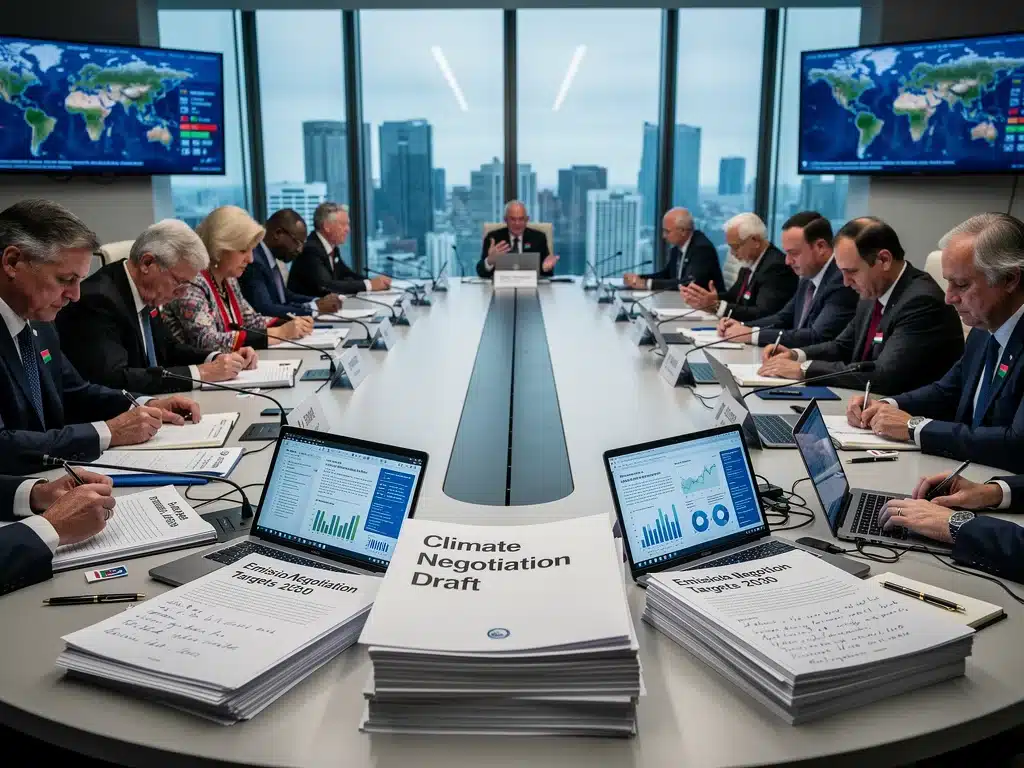
Shifting Global Energy Dynamics
The global energy transition is altering traditional geopolitical alignments. Countries that embrace clean energy leadership can gain a competitive edge in emerging markets and strengthen diplomatic ties through technology transfer and joint ventures.
The U.S. aims to leverage its technological prowess to solidify its position in this evolving landscape.
The push for decarbonization also creates new areas of competition, particularly around critical mineral extraction and processing. Ensuring secure and ethical supply chains for materials like lithium, cobalt, and rare earth elements is a growing priority for U.S. energy policy.
This requires robust diplomatic engagement and strategic partnerships to avoid bottlenecks and price volatility. The intricate relationship between Geopolitical Chessboard: US Foreign Policy Shifts 2026 Analysis and resource geopolitics is undeniable.
- Formation of new alliances focused on clean energy trade and technology.
- Increased focus on domestic critical mineral extraction and processing.
- Diplomatic efforts to secure diversified supply chains for renewable components.
- Addressing energy poverty through sustainable development initiatives.
These shifting dynamics necessitate a comprehensive and adaptive U.S. foreign policy that integrates climate and energy considerations with traditional security and economic interests.
The goal is to navigate a complex global environment while advancing both climate goals and national interests.
Economic Implications and Green Job Growth
The transition driven by international climate accords is poised to generate significant economic implications for the U.S., particularly in the realm of green job creation.
Investments in renewable energy, energy efficiency, and sustainable infrastructure are creating a new wave of employment opportunities across various sectors. This economic transformation is a key benefit of aligning with global climate goals.
From manufacturing solar panels and wind turbine components to installing electric vehicle charging stations and retrofitting buildings for energy efficiency, the demand for skilled labor is growing.
These green jobs often offer competitive wages and contribute to local economic development, providing a tangible economic incentive for the energy transition. The economic narrative around Climate Change Diplomacy frequently highlights this job growth potential.
Furthermore, by leading in clean energy technologies, the U.S. can enhance its export capabilities, creating new markets for American-made goods and services.
This not only boosts economic growth but also strengthens the nation’s competitive standing in the global economy. The economic benefits extend beyond direct job creation to broader industrial growth and innovation.
Fostering a Resilient Green Economy
U.S. energy policy is increasingly focused on fostering a resilient green economy that can withstand future economic shocks and environmental challenges.
This involves strategic investments in workforce development programs to train workers for new green jobs and support for small businesses innovating in the clean energy space. The aim is to ensure an equitable transition that benefits all segments of society.
The economic models projecting the impact of climate action often point to net positive job growth, even accounting for potential job losses in traditional energy sectors.
The key lies in proactive planning and investment in transition support for affected communities. The economic dimension is central to the success of Climate Change Diplomacy, ensuring broad public and political buy-in.
- Expansion of vocational training programs for renewable energy technicians.
- Incentives for domestic manufacturing of clean energy components.
- Support for community-based clean energy projects.
- Development of green finance mechanisms and investment vehicles.
By embracing the economic opportunities presented by the clean energy transition, the U.S. can build a more sustainable and prosperous future.
This strategic alignment of economic development with environmental stewardship is a cornerstone of current U.S. energy policy, driven by both domestic needs and international expectations.
Regulatory Frameworks and State-Level Actions
The implementation of international climate accords at the U.S. domestic level largely depends on robust regulatory frameworks and proactive state-level actions.
While federal policy sets the overarching direction, individual states often lead the way in creating specific regulations, incentives, and programs that accelerate the clean energy transition. This decentralized approach allows for tailored solutions that address regional energy needs and economic conditions.
Many states have already established ambitious renewable energy mandates, carbon reduction targets, and electric vehicle adoption goals that go beyond federal minimums.
These state-level initiatives create a proving ground for innovative policies and technologies, demonstrating their feasibility and effectiveness. The success of Climate Change Diplomacy will be significantly influenced by these subnational efforts.
Moreover, state public utility commissions play a critical role in shaping energy markets, approving new infrastructure projects, and regulating utility rates. Their decisions directly impact the pace and scale of renewable energy deployment and grid modernization.
This intricate web of federal, state, and local governance is crucial for translating international commitments into tangible domestic outcomes.
Harmonizing Federal and State Climate Efforts
Achieving national climate goals requires effective harmonization between federal directives and state-specific actions. Federal policy can provide financial incentives, technical assistance, and regulatory guidance that supports state efforts, fostering a cohesive national strategy.
Collaboration between different levels of government is essential to avoid policy fragmentation and maximize impact.
For example, federal clean energy tax credits can complement state renewable portfolio standards, making clean energy projects more economically viable.
Similarly, federal investments in research and development can support state-level demonstration projects for emerging technologies. This coordinated approach is vital for the effective implementation of commitments stemming from Climate Change Diplomacy.
- Development of regional clean energy transmission projects.
- Standardization of building codes for energy efficiency.
- Interstate cooperation on carbon reduction initiatives.
- Public engagement and education campaigns on clean energy benefits.
The ongoing dialogue between federal and state governments, along with active participation from local communities and industry stakeholders, will be key to developing comprehensive and effective energy policies.
This multi-level governance approach ensures that the U.S. can meet its international obligations while addressing diverse domestic priorities.
Public Opinion and Political Will
The effectiveness of Climate Change Diplomacy is ultimately tied to public opinion and sustained political will. While scientific consensus on climate change is strong, public support for specific policy interventions can vary significantly.
Understanding these dynamics is crucial for policymakers seeking to implement ambitious energy transitions.
Growing awareness of climate impacts, such as extreme weather events, often strengthens public demand for action, creating a more favorable environment for climate policies.
However, concerns about energy costs, economic competitiveness, and potential job displacement can also influence public sentiment and political feasibility. Navigating these diverse perspectives requires effective communication and inclusive policy design.
Political will, particularly in a polarized environment, is essential for passing and sustaining long-term climate and energy legislation.
International accords can provide a powerful external motivator, but domestic political consensus is necessary for durable policy implementation. The period leading up to 2026 will be a critical test of this political resolve in the U.S.
Building Consensus for a Sustainable Future
Building consensus for a sustainable energy future involves engaging a broad range of stakeholders, including industry, labor unions, environmental groups, and local communities.
Transparent communication about the benefits of clean energy, coupled with support for affected workers and communities, can help bridge divides and foster broader acceptance of policy changes.
Education and outreach initiatives are vital for informing the public about the urgency of climate action and the opportunities presented by the clean energy transition.
Highlighting the economic advantages, health benefits, and national security enhancements associated with decarbonization can strengthen public support. This is fundamental for the success of Climate Change Diplomacy.
- Public education campaigns on climate change impacts and solutions.
- Stakeholder dialogues to address concerns and build collaborative solutions.
- Incentives for early adopters of clean energy technologies.
- Highlighting the co-benefits of climate action, such as improved public health.
Ultimately, a sustained commitment to climate action, underpinned by strong public support and political will, will be crucial for the U.S. to meet its international obligations and secure a resilient energy future.
The interplay between global diplomacy and domestic sentiment will continue to shape the trajectory of U.S. energy policy.
International Collaboration and Global Leadership
International collaboration remains a cornerstone of effective climate action, and the U.S. role in global leadership is pivotal. Recent accords underscore the necessity of countries working together to address a challenge that transcends national borders.
The U.S. re-engagement with global climate initiatives has revitalized diplomatic efforts and set a precedent for other major economies.
Through participation in multilateral forums, bilateral partnerships, and joint research ventures, the U.S. can share expertise, foster technological advancements, and mobilize finance for climate solutions worldwide.
This collaborative approach not only helps achieve global emission reduction targets but also strengthens diplomatic ties and enhances U.S. influence on the international stage. The essence of Climate Change Diplomacy lies in this collaborative spirit.
As a leading economy and innovator, the U.S. has a unique responsibility to demonstrate ambitious climate action at home while encouraging similar efforts abroad.
Its domestic energy policy choices serve as a powerful signal to the international community, influencing the pace and scale of global decarbonization efforts. This leadership role is both an opportunity and a challenge for the nation.
U.S. Role in Shaping Global Climate Action
The U.S. plays a critical role in shaping the ambition and direction of global climate action. By actively participating in negotiations, providing climate finance, and promoting clean energy technologies, it can accelerate the worldwide transition to a low-carbon economy.
Its diplomatic efforts are crucial for building consensus among diverse nations and overcoming geopolitical hurdles.
Supporting developing countries in their climate mitigation and adaptation efforts is another key aspect of U.S. international collaboration.
This includes financial aid, technical assistance, and capacity-building programs that enable these nations to adopt cleaner energy pathways and build resilience to climate impacts. This commitment is fundamental to the spirit of Climate Change Diplomacy.
- Initiating and participating in global climate summits and dialogues.
- Contributing to international climate funds and initiatives.
- Promoting clean energy technology transfer to developing nations.
- Leading by example through ambitious domestic climate policies.
By embracing its role as a global climate leader, the U.S. can drive collective action, foster innovation, and build a more sustainable and secure future for all. The interplay between international diplomacy and domestic policy is key to unlocking the full potential of global climate efforts.
| Key Aspect | Impact on U.S. Energy Policy |
|---|---|
| Renewable Energy Growth | Accelerates deployment through incentives and regulatory support. |
| Fossil Fuel Transition | Drives innovation in CCUS and diversification into low-carbon fuels. |
| Technological Innovation | Boosts R&D in advanced batteries, hydrogen, and grid modernization. |
| Geopolitical Shifts | Redefines energy security and fosters new international collaborations. |
Frequently Asked Questions About Climate Diplomacy and U.S. Energy
International accords set global emission reduction targets and establish frameworks for climate action. For the U.S., these agreements translate into domestic policy pressures, encouraging federal and state governments to implement regulations, incentives, and investments that align with global decarbonization goals, particularly in renewable energy and emission controls.
The U.S. fossil fuel industry faces challenges from declining demand, increased regulatory scrutiny, and potential carbon pricing. International accords push for phasing out fossil fuel subsidies and reducing methane emissions, requiring significant capital investment in carbon capture technologies or diversification into cleaner energy sources to remain viable in the evolving market.
Yes, international accords are expected to significantly accelerate U.S. renewable energy growth. They reinforce domestic policies like tax credits and grants, making clean energy projects more attractive. Global cooperation also facilitates technology transfer and reduces costs, further boosting deployment of solar, wind, and other renewable sources across the nation by 2026.
International agreements redefine U.S. energy security by shifting focus from oil and gas supply to securing critical minerals for renewable technologies. They necessitate diversified supply chains and international collaboration to mitigate risks. By promoting clean energy, these accords also enhance national security by reducing reliance on volatile fossil fuel markets and addressing climate-related geopolitical instability.
Technology is crucial for meeting international climate commitments. Accords spur innovation in areas like battery storage, advanced nuclear, and green hydrogen. U.S. policy supports R&D and deployment of these technologies, enhancing grid modernization and energy efficiency. This technological leadership is vital for achieving emission reduction targets and fostering economic growth by 2026.
Looking Ahead
The complex interplay between Climate Change Diplomacy will continue to shape the nation’s energy trajectory.
The path forward demands sustained commitment, continuous innovation, and adaptive policy responses from all levels of government and industry. The coming years will reveal the full extent of these transformations.
Monitoring key legislative developments, technological breakthroughs, and shifts in international relations will be essential to understanding the evolving landscape.
The U.S. response to these global pressures will not only determine its own energy future but also its position as a leader in the global effort to combat climate change. The stakes are high, and the implications far-reaching.