Mental Health Services in 2026: A Guide to Expanded Coverage and Access Under New Federal Guidelines

The landscape of Mental Health Services is undergoing a historic shift in 2026 as new federal mandates redefine how Americans access psychological support.
These sweeping legislative updates aim to dismantle traditional barriers, ensuring that therapeutic interventions are more integrated into standard medical care than ever before.
Navigating this evolving behavioral healthcare terrain requires a clear understanding of the latest regulatory adjustments and reimbursement protocols.
From enhanced parity requirements to expanded digital counseling options, these policy changes are designed to prioritize patient outcomes and streamline the delivery of psychiatric care across the nation.
Whether you are a practitioner adapting to modern compliance standards or an individual seeking affordable wellness resources, staying informed is essential.
Understanding the New Federal Guidelines for Mental Health Services in 2026
The federal government has unveiled a series of guidelines designed to bolster mental health support nationwide. These directives are not merely incremental adjustments but represent a significant policy overhaul.
These changes are set to expand the scope of covered services, enhance parity enforcement, and streamline access mechanisms. The objective is to dismantle barriers that have historically hindered effective mental health treatment.
For Mental Health Services in 2026, these guidelines will translate into more robust insurance coverage, greater availability of diverse treatment modalities, and improved provider networks.
Key Pillars of the New Federal Framework
The new federal framework is built upon several foundational pillars, each designed to strengthen the mental healthcare system.
One primary focus is on requiring health plans to offer mental health and substance use disorder benefits comparable to medical and surgical benefits.
This renewed emphasis on mental health parity aims to eliminate discriminatory practices in insurance coverage. It seeks to ensure that individuals receive the necessary care without facing undue financial or administrative obstacles.
Another critical aspect involves promoting integrated care models, where mental health services are seamlessly incorporated into primary care settings.
This approach facilitates earlier intervention and reduces the stigma often associated with seeking specialized mental health treatment.
- Expanded Parity Enforcement: Stricter oversight to ensure mental health benefits are on par with physical health benefits.
- Integrated Care Models: Encouraging the co-location and coordination of mental and physical healthcare services.
- Workforce Development: Funding initiatives to address the shortage of mental health professionals across various specialties.
The guidelines also prioritize the use of evidence-based practices and outcomes-based care. This ensures that the services provided are effective and yield measurable improvements in patient well-being.
Furthermore, there is a strong push for leveraging technology to expand reach, particularly in rural and underserved areas. Telehealth and digital mental health platforms are expected to play an increasingly vital role in delivering Mental Health Services in 2026.
These comprehensive measures are intended to create a more equitable, efficient, and effective mental healthcare system. They represent a concerted effort to meet the growing demand for mental health support across the nation.
Expanded Coverage: What Insured Individuals Can Expect
The most immediate impact of the new federal guidelines will be felt by insured individuals. Sweeping changes are coming to health insurance plans, promising broader coverage for mental health conditions.
Patients can anticipate reduced out-of-pocket costs, fewer arbitrary limitations on visits or treatments, and clearer pathways to accessing care. These improvements aim to make mental health treatment more affordable and less burdensome.
For Mental Health Services in 2026, this means a significant reduction in barriers that previously prevented many from seeking or continuing necessary treatment. Insurance providers are now obligated to comply with a more stringent set of rules.
Navigating Your Enhanced Mental Health Benefits
Understanding your new mental health benefits will be key to maximizing access to care. Health plans will be required to provide clearer explanations of coverage, including details on deductibles, co-pays, and out-of-pocket maximums specifically for mental health services.
Individuals should review their plan documents carefully or contact their insurance providers directly to understand the specifics of their enhanced coverage. This proactive approach ensures individuals can fully utilize the expanded offerings.
The guidelines also address prior authorization requirements, aiming to reduce unnecessary hurdles for accessing care. While some authorization processes may remain, they are expected to be more streamlined and less restrictive under the new rules for Mental Health Services in 2026.
- Increased Session Limits: Many plans will remove or significantly raise limits on the number of therapy sessions covered.
- Broader Provider Networks: Insurers must expand their networks to include a wider range of mental health specialists.
- Lower Cost-Sharing: Reductions in co-payments and co-insurance for mental health treatments are anticipated.
The emphasis on parity means that if a plan covers unlimited visits for a physical condition, it must offer similar coverage for mental health conditions. This principle is fundamental to the new regulatory landscape.
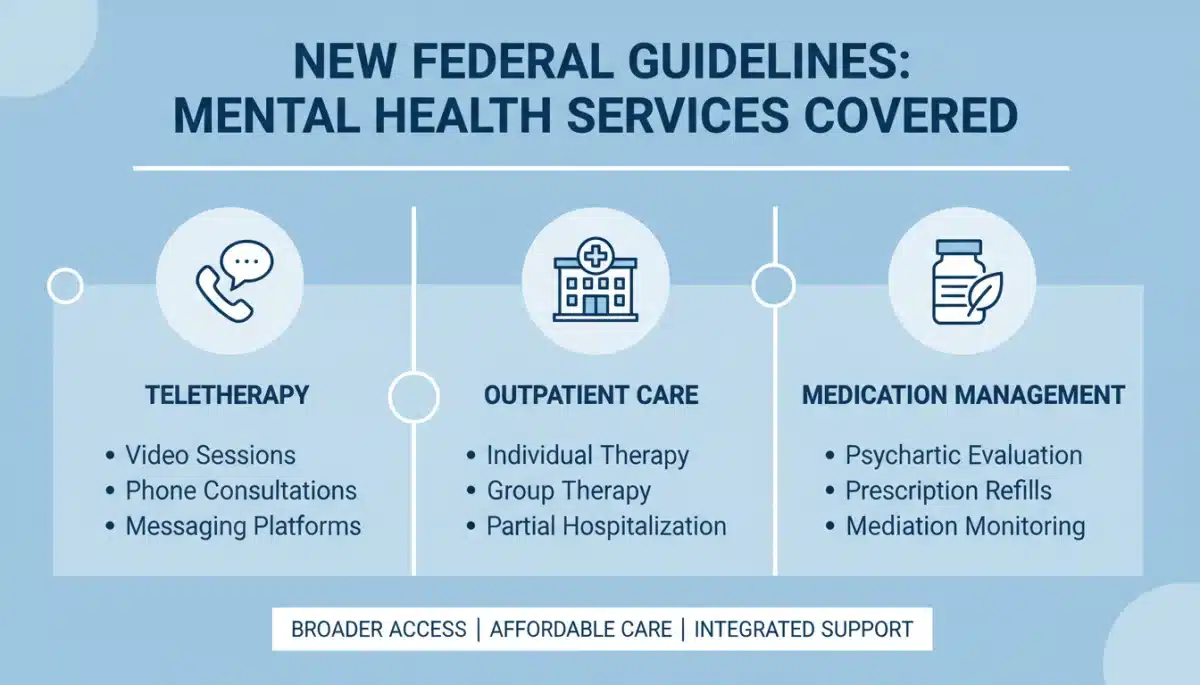
Furthermore, coverage for a wider array of evidence-based treatments, including various forms of psychotherapy, counseling, and medication management, is expected to become standard. This flexibility allows for more personalized and effective treatment plans.
These changes are designed to empower individuals by granting them greater control and choice over their mental healthcare. The goal is to ensure that financial constraints no longer dictate access to vital support.
Addressing Access Barriers: Practical Solutions for Patients and Providers
Beyond insurance coverage, the new federal guidelines tackle systemic access barriers that have long plagued mental healthcare. These include geographical limitations, provider shortages, and cultural insensitivity in care delivery.
Practical solutions are being implemented to overcome these challenges, fostering a more inclusive and accessible mental health system. The focus is on innovative strategies that bridge existing gaps in care.
For Mental Health Services in 2026, this translates into more localized resources, diversified provider options, and culturally competent care. The aim is to ensure that help is available where and when it is needed most.
Leveraging Telehealth and Digital Platforms
Telehealth is emerging as a cornerstone of expanded access to mental health services, particularly in areas with limited in-person providers. The federal guidelines strongly support its continued integration and reimbursement.
This allows individuals to connect with mental health professionals from the comfort and privacy of their homes, significantly reducing travel time and logistical challenges. Telehealth platforms are becoming more sophisticated and secure, enhancing patient experience.
Digital mental health tools, including apps for mood tracking, cognitive behavioral therapy (CBT) exercises, and guided meditation, are also gaining prominence.
These resources complement traditional therapy and provide ongoing support, extending the reach of Mental Health Services in 2026.
Beyond technology, efforts are underway to expand the mental health workforce. This includes funding for training programs, incentives for practitioners to work in underserved areas, and support for diverse professional backgrounds.
Community-based mental health centers are also receiving increased support, serving as vital hubs for accessible care. These centers often offer a range of services, from crisis intervention to long-term therapy, tailored to local needs.
Culturally competent care is another critical component, ensuring that services are respectful and effective for diverse populations. Training for providers will emphasize cultural humility and understanding the unique mental health needs of various communities.
The Role of Technology in Modern Mental Health Services in 2026
Technology is not just a convenience; it is a transformative force in the delivery of modern mental health services. Its role is set to expand dramatically under the new federal guidelines, shaping how care is accessed and experienced.
From teletherapy to AI-powered diagnostics and digital support tools, technological advancements are making mental health care more efficient, personalized, and far-reaching. This integration is crucial for meeting the increasing demand for services.
The emphasis on digital solutions means that Mental Health Services in 2026 will be more adaptable and responsive to individual needs, breaking down geographical and logistical barriers.
Innovations in Digital Mental Health
Telepsychiatry and telecounseling have become indispensable, allowing patients in remote areas or those with mobility issues to receive expert care. Secure video conferencing platforms ensure privacy and effective communication, replicating the in-person therapy experience.
Beyond live sessions, asynchronous communication tools, such as secure messaging with therapists, offer flexibility and continuous support. These options cater to varying patient preferences and schedules, enhancing engagement with care.
Artificial intelligence (AI) is also beginning to play a role in mental health, from aiding in early diagnosis by analyzing speech patterns to powering chatbots that provide initial support and guide users to appropriate resources.
This technology augments, rather than replaces, human providers for Mental Health Services in 2026.

Wearable devices and sensors can monitor physiological markers related to stress and anxiety, providing real-time data that can inform treatment plans. This data-driven approach allows for more precise and timely interventions.
Virtual reality (VR) is being explored for exposure therapy for phobias and PTSD, creating controlled environments for therapeutic interventions. These immersive experiences offer new avenues for treatment that were previously difficult to implement.
The federal guidelines encourage the development and adoption of these innovative technologies, recognizing their potential to significantly improve the reach and quality of mental health care. Ensuring equitable access to these digital tools will be a key challenge and focus.
Workforce Development and Training Initiatives
A critical component of expanding access to Mental Health Services in 2026 is addressing the pervasive shortage of qualified mental health professionals. New federal guidelines allocate significant resources to workforce development and training.
These initiatives aim to increase the number of psychiatrists, psychologists, therapists, and social workers, particularly in underserved communities. The goal is to build a robust and diverse mental health workforce capable of meeting national demand.
This strategic investment in human capital is foundational to realizing the vision of comprehensive and accessible mental healthcare. Without enough skilled professionals, expanded coverage alone cannot solve the access crisis.
Bolstering the Mental Health Professional Pipeline
Federal funding is being directed towards scholarships, loan repayment programs, and grants for students pursuing careers in mental health.
These incentives are designed to attract more individuals to the field and alleviate financial burdens associated with higher education.
Emphasis is also placed on recruiting professionals from diverse backgrounds, ensuring that the mental health workforce reflects the populations it serves. Culturally competent providers are essential for delivering effective and trusted care.
Furthermore, training programs are being updated to include specific modules on integrated care, telehealth delivery, and evidence-based practices relevant to Mental Health Services in 2026. This ensures new graduates are well-equipped for the evolving landscape.
- Scholarship Programs: Financial aid to encourage students to enter mental health professions.
- Loan Forgiveness: Incentives for professionals to practice in rural and underserved areas.
- Diversity Initiatives: Programs to increase representation of minority groups within the mental health workforce.
Beyond new recruits, continuing education and professional development for existing practitioners are also being supported. This keeps the current workforce abreast of the latest research, treatment modalities, and technological advancements.
Specialized training in areas such as trauma-informed care, addiction treatment, and child and adolescent mental health is also a priority. This ensures a comprehensive array of expertise is available to address diverse patient needs.
These concerted efforts in workforce development are vital for creating a sustainable and responsive mental health system. The long-term impact will be a more resilient and accessible network of mental health professionals across the United States.
Preventative Care and Early Intervention Strategies
The new federal guidelines for Mental Health Services in 2026 place a strong emphasis on preventative care and early intervention. Shifting from a reactive approach to a proactive one is crucial for improving long-term mental health outcomes.
By identifying and addressing mental health concerns at their earliest stages, it is possible to prevent conditions from escalating into more severe and debilitating illnesses. This approach not only benefits individuals but also reduces the overall burden on the healthcare system.
Promoting mental well-being before a crisis emerges is a cornerstone of the new federal strategy, integrating mental health screening into routine medical care and community programs.
Integrating Mental Health into Everyday Life
One key strategy involves integrating mental health screenings into routine primary care visits for all ages. Early detection allows for prompt referrals and interventions, often before symptoms become acute.
Schools and workplaces are also being encouraged to implement mental health literacy programs and provide accessible resources. Educating the public about mental health reduces stigma and empowers individuals to seek help proactively.
Community-based programs focusing on stress reduction, resilience building, and social support are also gaining traction. These initiatives foster environments that promote mental well-being and provide accessible resources for Mental Health Services in 2026.
- Universal Screening: Routine mental health assessments during primary care appointments.
- School-Based Programs: Mental health education and support services for students and staff.
- Workplace Wellness: Employer-supported initiatives promoting employee mental well-being.
The guidelines also support public awareness campaigns aimed at destigmatizing mental illness and encouraging open conversations about mental health. Reducing stigma is essential for individuals to feel comfortable seeking help.
Furthermore, funding is allocated for research into effective preventative strategies and early intervention models. This ensures that policies are informed by the latest scientific understanding of mental health and human behavior.
These preventative and early intervention strategies are designed to create a culture where mental health is openly discussed, prioritized, and supported from an early age. This fundamental shift is expected to yield significant positive impacts on national mental well-being.
Enforcement and Accountability Under New Federal Guidelines
The effectiveness of new federal guidelines for Mental Health Services in 2026 hinges on robust enforcement and clear accountability mechanisms. The government is strengthening its oversight to ensure compliance from insurance providers and healthcare systems.
This includes increased auditing, stricter penalties for non-compliance, and clearer avenues for patient complaints and appeals. The aim is to ensure that the promised expanded coverage and access are not merely theoretical but practically realized.
Transparency and adherence to the new parity laws are paramount, with federal agencies actively monitoring the implementation of these critical changes.
Mechanisms for Ensuring Compliance
Federal agencies, such as the Department of Labor and the Department of Health and Human Services, are tasked with monitoring health plans for compliance with mental health parity laws. They will conduct audits and investigate complaints to identify and rectify violations.
Patients and providers will have clearer processes for filing grievances if they believe their mental health benefits are being unfairly denied or limited. These appeal processes are designed to be more accessible and responsive.
Educational resources will also be provided to both consumers and insurers to ensure a comprehensive understanding of the new requirements. This proactive approach aims to prevent violations before they occur, reinforcing the standards for Mental Health Services in 2026.
- Increased Audits: Regular checks on health plans to ensure adherence to parity laws.
- Stronger Penalties: Fines and other punitive measures for non-compliant insurers.
- Consumer Complaint Pathways: Improved systems for patients to report coverage denials or limitations.
The guidelines also encourage states to enhance their own oversight capabilities and collaborate with federal authorities. This dual-level enforcement creates a more comprehensive safety net for patients.
Public reporting on compliance rates and identified violations will further promote transparency and accountability. This data will allow the public and policymakers to assess the effectiveness of the new guidelines and make further adjustments as needed.
Ultimately, these enforcement and accountability measures are designed to build trust in the mental healthcare system. They ensure that the commitment to expanded mental health access translates into real-world benefits for all Americans.
Future Outlook for Mental Health Services in 2026 and Beyond
The initiatives set forth by the new federal guidelines represent a pivotal moment for Mental Health Services in 2026. This comprehensive approach is designed to lay the groundwork for a more resilient and responsive mental healthcare system in the years to come.
While the immediate focus is on implementation and compliance, the long-term vision extends to continuous improvement and adaptation. The goal is to create a system that can effectively address evolving mental health needs and challenges.
Ongoing research, technological advancements, and policy refinements will continue to shape the trajectory of mental health care. The journey towards truly integrated and accessible mental health support is a dynamic and continuous one.
Anticipated Long-Term Impacts and Challenges
In the long term, the new guidelines are expected to significantly reduce the stigma associated with mental illness, fostering a more open and supportive societal dialogue. This cultural shift is as important as policy changes for promoting mental well-being.
Improved access to preventative care and early intervention is anticipated to lead to a decrease in the prevalence of severe mental health conditions. This will result in healthier communities and reduced societal costs associated with untreated mental illness.
However, challenges such as maintaining adequate funding, addressing new workforce demands, and adapting to emerging mental health crises will persist. Sustained commitment and flexible policies will be essential for the continued success of Mental Health Services in 2026 and beyond.
- Reduced Stigma: Greater societal acceptance and understanding of mental health challenges.
- Improved Outcomes: Earlier intervention leading to better recovery rates and quality of life.
- Sustainable Funding: Ensuring consistent financial support for mental health initiatives.
The integration of mental health with physical health is expected to become even more seamless, leading to truly holistic healthcare models. This collaborative approach recognizes the interconnectedness of mind and body.
Furthermore, global events and societal changes will continue to influence mental health needs, requiring ongoing innovation and responsiveness from the healthcare system. The framework established now provides a strong foundation for future adaptations.
The future of mental health services appears brighter, with a clear direction towards greater equity, accessibility, and effectiveness. Continued vigilance and advocacy will ensure these advancements translate into tangible benefits for all.
| Key Aspect | Impact Summary |
|---|---|
| Expanded Coverage | Insurance plans must offer mental health benefits comparable to physical health, reducing costs and limitations. |
| Enhanced Access | Telehealth, diverse provider networks, and community programs increase availability of care. |
| Workforce Development | Federal initiatives address provider shortages through training, scholarships, and recruitment. |
| Preventative Focus | Emphasis on early intervention and mental health promotion to improve long-term outcomes. |
Frequently Asked Questions About Mental Health Services in 2026
The new federal guidelines primarily focus on strengthening mental health parity, meaning insurance coverage for mental health and substance use disorders must be comparable to physical health benefits. They also emphasize expanding access through telehealth, integrating care, and boosting the mental health workforce across the United States.
You can anticipate broader coverage for various mental health treatments, potentially fewer limitations on sessions, and reduced out-of-pocket costs. Insurers are required to align their mental health benefits more closely with medical and surgical benefits, removing discriminatory practices.
Key solutions include widespread adoption and reimbursement for telehealth services, increased funding for mental health workforce development, and enhanced support for community-based mental health centers. These measures aim to overcome geographical and provider shortage barriers.
Yes, technology is central to the new guidelines. Teletherapy, digital mental health platforms, and even AI-powered tools are expected to expand access, improve efficiency, and offer personalized support. These innovations will make mental health care more adaptable and far-reaching.
The guidelines strongly advocate for preventative care and early intervention, integrating mental health screenings into routine healthcare and promoting mental health literacy. The goal is to address concerns early, reduce stigma, and prevent conditions from escalating, fostering overall well-being.
Looking Ahead: Impact and Implications
The comprehensive federal guidelines for Mental Health Services in 2026 mark a significant pivot towards a more equitable and accessible mental healthcare system.
This shift is not merely regulatory; it signifies a societal recognition of mental health as a fundamental human right and a critical component of public health.
As these changes unfold, continuous monitoring and adaptation will be essential to ensure their intended benefits are fully realized.
Stakeholders must remain vigilant, advocating for sustained funding and addressing emerging challenges to solidify these advancements for future generations.
The long-term success of these reforms will ultimately depend on the collective commitment to fostering a culture of mental well-being, supported by robust policies and readily available, high-quality care.