Navigating the 2026 Job Market: 5 Essential Skills for Career Growth and Stability

The professional world is shifting beneath our feet, making it vital to master the art of navigating the job market this year. Standing still is no longer an option if you want to remain relevant in a workspace defined by rapid, tech-driven evolution.
Success in this modern employment landscape demands more than just experience; it requires a specialized toolkit of future-proof competencies. To thrive amidst these industrial shifts, you must pivot from traditional roles toward more agile, high-demand career pathways.
Stability is no longer guaranteed by a title, but by your ability to adapt to new economic realities. The following guide explores the five pillars of professional resilience that will secure your trajectory and keep your prospects bright in a competitive arena.
The Evolving Landscape of Work: Understanding the Shift
The global economy is currently experiencing unprecedented shifts, fundamentally altering traditional career paths and job requirements.
Automation, artificial intelligence, and remote work models are not just trends; they are foundational elements reshaping how and where work gets done, making job market more challenging.
These changes demand a workforce that is not only adaptable but also equipped with skills that complement, rather than compete with, emerging technologies. The focus is moving from routine tasks to complex problem-solving, creativity, and interpersonal capabilities.
Understanding these macro-level changes is the first step toward effective career planning and skill acquisition. Professionals must acknowledge that continuous learning is no longer optional but a core component of career longevity.
Technological Integration and Its Impact
Technological advancements, particularly in AI and machine learning, are redefining industries and creating new job categories while rendering others obsolete. This integration requires workers to become proficient in using these tools, rather than being replaced by them.
The ability to interact with, manage, and leverage AI systems will be a critical differentiator. This involves not just technical understanding, but also ethical considerations and practical application in various professional contexts.
Consequently, roles that involve data analysis, AI-driven decision-making, and digital transformation leadership are experiencing significant growth, underscoring the need for specialized training.
Remote Work and Global Collaboration
The widespread adoption of remote and hybrid work models has expanded talent pools beyond geographical boundaries, increasing competition and requiring new forms of collaboration. Effective communication and project management in distributed teams are now paramount.
Professionals must master digital communication tools and develop strategies for maintaining productivity and team cohesion when not physically co-located. This shift also emphasizes the importance of cultural intelligence and cross-cultural communication skills.
The ability to thrive in a globally connected, virtual environment is a non-negotiable skill for job market, impacting everything from daily tasks to strategic initiatives.
Skill 1: Digital Fluency and AI Literacy
In an increasingly digitized world, digital fluency extends beyond basic computer proficiency; it encompasses the ability to effectively navigate and utilize an array of digital tools and platforms.
This foundational skill is crucial for job market, as nearly every sector relies on advanced digital infrastructure.
AI literacy, specifically, involves understanding how artificial intelligence functions, its applications, and its ethical implications. It is about being able to work alongside AI systems, interpret their outputs, and leverage them for enhanced productivity and decision-making.
Professionals who master these competencies will be better positioned to adapt to new technologies as they emerge, ensuring their skills remain relevant and valuable in a rapidly evolving tech landscape.
Mastering Data Analytics and Interpretation
The sheer volume of data generated daily presents both challenges and opportunities. The ability to collect, analyze, and interpret complex datasets is invaluable for informed decision-making across all industries.
This skill involves not just familiarity with data analysis tools, but also critical thinking to extract meaningful insights and present them clearly. Data-driven approaches are becoming standard, impacting strategy, marketing, and operational efficiency.
Developing proficiency in statistical analysis, data visualization, and predictive modeling will provide a significant competitive edge in the 2026 job market, allowing individuals to contribute strategically.
Understanding the nuances of data privacy and security is also part of this domain, as organizations increasingly grapple with safeguarding sensitive information. Ethical considerations surrounding data use are growing in importance..
Skill 2: Critical Thinking and Complex Problem-Solving
As routine tasks become automated, the demand for human capabilities like critical thinking and complex problem-solving intensifies. These skills are essential for addressing novel challenges that lack clear-cut solutions, a common scenario in job market.
Critical thinking involves the ability to analyze information objectively, identify biases, and formulate reasoned judgments. It’s about questioning assumptions and seeking deeper understanding rather than accepting information at face value.
Complex problem-solving, on the other hand, requires breaking down intricate issues into manageable components, developing innovative solutions, and evaluating their potential outcomes. This often involves interdisciplinary approaches.
Analytical Reasoning and Decision-Making
The capacity for analytical reasoning allows professionals to dissect problems, identify underlying causes, and evaluate various courses of action. This is crucial in dynamic environments where quick, yet well-informed, decisions are necessary.
Effective decision-making is not solely based on data; it integrates intuition, experience, and an understanding of human factors. Professionals must weigh risks and benefits, considering both immediate and long-term consequences.
Cultivating these skills involves practice in scenario planning, engaging in debates, and seeking diverse perspectives to broaden one’s analytical scope, preparing for the complexities of job market.

Skill 3: Adaptability and Continuous Learning
The pace of change in the modern world dictates that adaptability is no longer a soft skill but a core requirement for professional survival. The ability to quickly adjust to new technologies, methodologies, and market demands is vital for job market.
Continuous learning, or lifelong learning, means actively seeking out new knowledge and skills throughout one’s career. This involves formal education, certifications, online courses, and informal learning through experiences and mentorship.
Those who embrace a growth mindset and are proactive in upskilling and reskilling will be better equipped to pivot their careers and remain competitive, regardless of industry shifts.
Embracing Change and Resilience
Change can often be met with resistance, but the adaptable professional views it as an opportunity for growth. This involves developing resilience, the capacity to recover quickly from setbacks and maintain productivity during periods of uncertainty.
Building resilience means cultivating a positive outlook, managing stress effectively, and being open to feedback and new ideas. It is about understanding that failure can be a learning opportunity rather than a definitive endpoint.
Organizations increasingly value individuals who can not only navigate change but also champion it, fostering an environment of innovation and continuous improvement within their teams.
Skill 4: Emotional Intelligence and Collaboration
In an era where technology handles many transactional tasks, human-centric skills like emotional intelligence and collaboration are becoming increasingly valuable. These competencies are fundamental for effective teamwork and leadership in job market.
Emotional intelligence involves understanding and managing one’s own emotions, as well as recognizing and influencing the emotions of others. This is critical for building strong relationships, resolving conflicts, and fostering a positive work environment.
Collaboration goes beyond simply working together; it implies a shared commitment to common goals, mutual respect, and the ability to leverage diverse perspectives to achieve superior outcomes. It is about synergy.
Effective Communication and Empathy
Clear and empathetic communication is the cornerstone of strong interpersonal relationships and successful collaboration. This includes active listening, articulate expression, and the ability to tailor messages to different audiences.
Empathy, the capacity to understand or feel what another person is experiencing from their frame of reference, is crucial for building trust and fostering an inclusive workplace. It allows for better understanding of colleagues’ needs and motivations.
Developing these communication and empathy skills enhances team dynamics, client relations, and leadership effectiveness, which are all vital for job market.
Skill 5: Creativity and Innovation
The ability to generate new ideas and find novel solutions to problems is a highly sought-after skill in a world constantly seeking improvement and differentiation. Creativity and innovation are driving forces behind business growth and competitive advantage, directly impacting job market.
Creativity is not limited to artistic fields; it applies to every domain, from developing new marketing strategies to optimizing operational processes. It involves thinking outside the box and challenging conventional approaches.
Innovation then takes these creative ideas and transforms them into tangible products, services, or processes that add value. It requires a blend of imagination, strategic thinking, and practical execution.
Design Thinking and Experimentation
Design thinking is a human-centered approach to innovation that involves empathizing with users, defining problems, ideating solutions, prototyping, and testing. It fosters a systematic way to develop creative solutions.
Experimentation, a key component of innovation, involves testing hypotheses and iterating on ideas based on feedback and results. This willingness to test, fail, and learn quickly is crucial for developing groundbreaking solutions.
Cultivating a mindset that embraces risk-taking and learning from failure is essential for fostering a culture of innovation, allowing professionals to contribute meaningfully to their organizations’ future success.
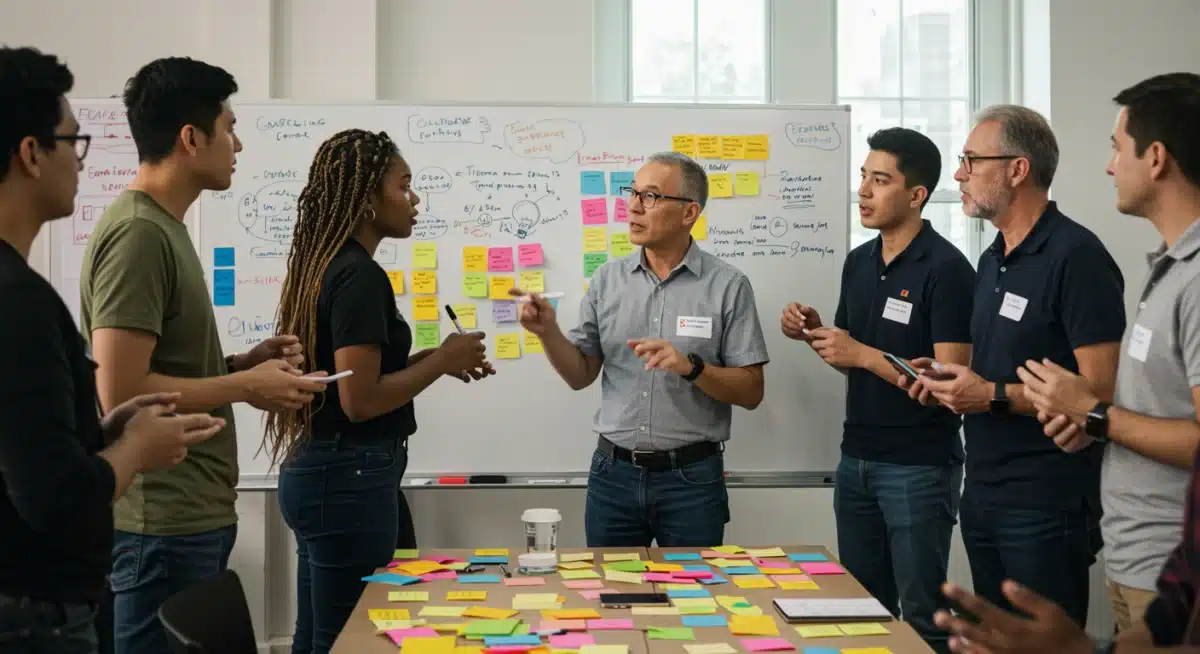
Strategies for Skill Development and Career Resilience
Building these essential skills requires a strategic and ongoing commitment to personal and professional development. It is not a one-time effort but a continuous journey of growth and adaptation, particularly for job market.
Identifying skill gaps and actively pursuing learning opportunities is paramount. This can involve formal education, industry certifications, online courses, and hands-on project experience that builds practical expertise.
Networking and mentorship also play crucial roles, providing insights into emerging trends and offering guidance on career paths. Connecting with peers and industry leaders can open doors to new opportunities and knowledge.
Leveraging Online Learning Platforms
The proliferation of online learning platforms offers unparalleled access to courses and programs covering a vast array of skills. Platforms like Coursera, edX, LinkedIn Learning, and Udacity provide flexible and often affordable options for upskilling.
These platforms allow individuals to learn at their own pace, often from leading universities and industry experts. Many offer micro-credentials or specializations that can be directly applied to career advancement.
Choosing courses that align with the five essential skills discussed can provide a structured pathway to developing the competencies needed for job market.
Seeking Mentorship and Professional Networks
Mentors can provide invaluable guidance, sharing their experiences and helping navigate complex career decisions. A good mentor offers advice, support, and constructive feedback, accelerating professional growth.
Building a strong professional network exposes individuals to new ideas, opportunities, and industry insights. Attending conferences, joining professional organizations, and engaging in online communities are effective ways to expand one’s network.
These connections can be instrumental in identifying emerging skill demands and finding opportunities to apply newly acquired knowledge, reinforcing the importance of proactive engagement in one’s career journey.
Government Initiatives and Industry Support for Upskilling
Recognizing the critical need for a skilled workforce, governments and industries are increasingly investing in programs designed to support upskilling and reskilling initiatives. These efforts aim to bridge skill gaps and prepare the labor force for the demands of job market.
Various government agencies offer grants, subsidies, and training programs for individuals and businesses to invest in continuous learning. These initiatives often target high-demand sectors and emerging technologies.
Industry associations and major corporations are also developing their own training academies and certification programs, ensuring that their workforces possess the necessary competencies to drive innovation and maintain competitiveness in the global market.
Public-Private Partnerships in Workforce Development
Collaborations between government entities, educational institutions, and private companies are becoming more prevalent. These partnerships create tailored training programs that directly address industry needs and ensure a steady supply of skilled talent.
Such initiatives often focus on practical, hands-on training and apprenticeships, providing participants with real-world experience. They aim to reduce the time it takes for new skills to translate into tangible job readiness.
These partnerships are crucial for fostering a dynamic and responsive workforce, capable of adapting to future challenges and seizing new opportunities in the evolving job market.
Employer-Sponsored Training Programs
Many forward-thinking employers are investing significantly in their employees’ professional development through in-house training programs and tuition reimbursement. This strategy benefits both employees, who gain new skills, and companies, who retain valuable talent.
These programs often focus on specific company needs, ensuring that employees are trained in the technologies and methodologies most relevant to their organization’s goals. This creates a highly skilled and loyal workforce.
Employees should actively seek out and participate in these opportunities, as they represent a direct investment in their career growth and enhance their ability to contribute effectively within their roles.
| Key Skill | Relevance for 2026 |
|---|---|
| Digital Fluency & AI Literacy | Essential for interacting with advanced technologies and data-driven environments. |
| Critical Thinking & Problem-Solving | Crucial for analyzing complex issues and developing innovative solutions in dynamic workplaces. |
| Adaptability & Continuous Learning | Vital for adjusting to rapid technological and market changes, fostering career resilience. |
| Emotional Intelligence & Collaboration | Key for effective teamwork, leadership, and navigating diverse professional relationships. |
Frequently Asked Questions About the 2026 Job Market
The 2026 job market is characterized by rapid technological integration, particularly AI and automation, alongside increased demand for remote work flexibility. It emphasizes human-centric skills like critical thinking, emotional intelligence, and continuous learning to complement emerging tech, making job market a key focus.
Digital fluency extends beyond basic computer use; it involves leveraging advanced digital tools and understanding AI applications. This skill ensures professionals can effectively interact with new technologies, interpret data, and enhance productivity, which is foundational for job market.
Developing critical thinking involves actively analyzing information, questioning assumptions, and engaging in problem-solving scenarios. Participating in debates, seeking diverse perspectives, and practicing analytical reasoning in daily tasks are effective methods to cultivate this essential skill for job market.
Continuous learning is vital for adapting to rapid changes in technology and market demands. It ensures professionals remain relevant by acquiring new knowledge and skills throughout their careers. Embracing a growth mindset and proactively seeking learning opportunities are key for job market.
Yes, soft skills like emotional intelligence and collaboration are more relevant than ever. As technology handles routine tasks, human abilities such as empathy, effective communication, and teamwork become critical for innovation, leadership, and navigating complex relationships, proving indispensable for job market.
Looking Ahead: Preparing for Tomorrow’s Opportunities
The insights into job market underscore a clear imperative: proactive skill development is non-negotiable. Professionals must view their careers as dynamic journeys requiring constant adaptation and learning.
Focusing on digital fluency, critical thinking, adaptability, emotional intelligence, and creativity will not only secure current positions but also unlock future opportunities. The future belongs to those who are prepared to evolve with the changing demands of work.
By strategically investing in these core competencies, individuals can transform potential challenges into significant advantages, ensuring long-term career resilience and sustained professional growth in the years to come.