Navigating International Sanctions: 2026 Impact on US Businesses
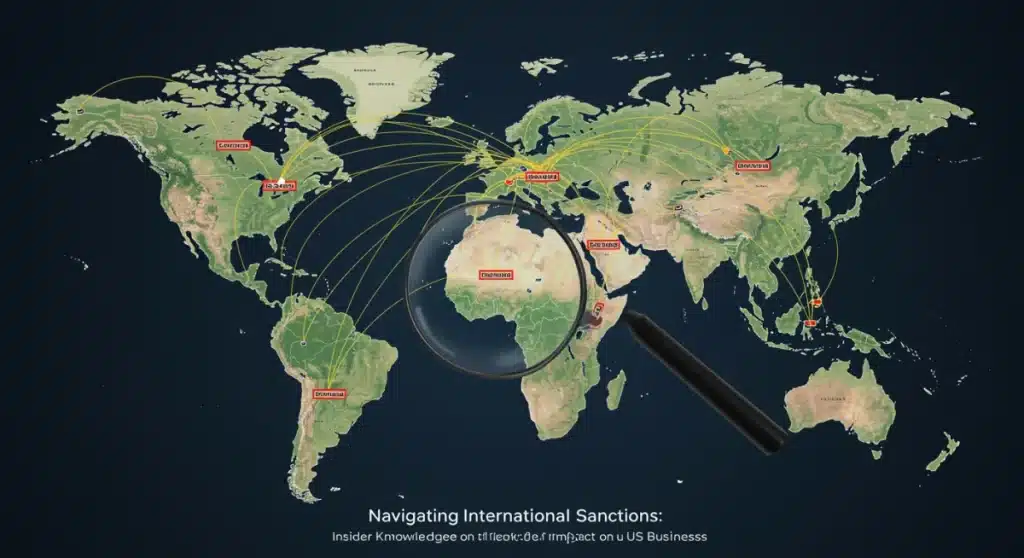
As we move through 2026, staying ahead of US Business Sanctions is no longer optional for companies aiming to thrive in an increasingly fragmented global marketplace.
Recent regulatory shifts and trade restrictions are forcing a total reevaluation of international partnerships. From supply chain audits to tighter export controls, the compliance landscape has never been more volatile.
This update breaks down the latest enforcement trends and emerging legal risks. We explore what has changed, why these measures matter now, and the critical indicators your organization must watch next.
Key Drivers and Anticipated Trends for 2026
Several critical factors are expected to drive the evolution of international sanctions in 2026. These include ongoing geopolitical conflicts, technological advancements, and shifting alliances among nations.
The increasing use of sanctions as a primary foreign policy instrument means US businesses cannot afford to be complacent. Monitoring these drivers provides a crucial advantage in anticipating regulatory changes.
Moreover, the focus on human rights and cybersecurity as grounds for sanctions is likely to intensify, adding new layers of complexity for compliance departments.
Geopolitical Shifts and Their Sanctions Implications
The ongoing power struggles between major global players, particularly in Eastern Europe and the Indo-Pacific, will undoubtedly shape the sanctions landscape.
US businesses with exposure to these regions face heightened scrutiny and potential restrictions.
These geopolitical shifts often lead to tit-for-tat measures, where one nation’s sanctions provoke retaliatory actions from another. This creates a volatile environment that demands constant vigilance from US companies.
Understanding the specific political agendas and economic vulnerabilities of key nations is essential for forecasting where new sanctions might emerge and what their scope could be.
- Escalating tensions in key regions directly inform new sanction targets.
- Alliances and counter-alliances influence the breadth and depth of restrictive measures.
- Political stability in target countries impacts the duration and effectiveness of sanctions.
Technological Advancements and Sanctions Enforcement
The rapid pace of technological innovation, particularly in areas like artificial intelligence and quantum computing, presents both challenges and opportunities for sanctions enforcement.
These technologies can be dual-use, making their export and control a complex issue.
Governments are increasingly leveraging advanced analytics and blockchain technology to track illicit financial flows and enforce sanctions more effectively. This means a higher likelihood of detection for non-compliant activities.
US businesses involved in technology transfer or development must stay ahead of these trends, ensuring their internal controls are robust enough to meet evolving regulatory expectations.
Direct Impact on US Businesses: Sectoral Analysis
The impact of international sanctions is rarely uniform across all sectors. Certain industries are inherently more exposed due to their nature of operations, global supply chains, or reliance on specific technologies.
Identifying these vulnerable sectors is crucial for US businesses to conduct tailored risk assessments and develop targeted mitigation strategies. A one-size-fits-all approach to compliance will prove insufficient.
The financial services, energy, technology, and defense sectors typically bear the brunt of sanctions, but new areas like biotechnology and critical minerals are also emerging as potential targets.
Financial Services and Sanctions Compliance
Financial institutions are always at the forefront of sanctions compliance, acting as gatekeepers against illicit transactions. In 2026, enhanced regulatory scrutiny and the proliferation of digital currencies will intensify this pressure.
US banks and financial service providers must invest in advanced screening technologies and robust compliance programs to avoid hefty penalties. The cost of non-compliance far outweighs the investment in preventative measures.
Furthermore, the increasing complexity of beneficial ownership rules and correspondent banking relationships necessitates a comprehensive understanding of international standards and expectations.
- Increased focus on beneficial ownership transparency to prevent sanctions evasion.
- Integration of AI and machine learning for real-time transaction monitoring.
- Challenges in managing exposure to digital assets and cryptocurrency transactions.
Energy and Supply Chain Vulnerabilities
The energy sector remains a prime target for international sanctions, given its strategic importance. US businesses involved in oil, gas, and renewable energy must navigate a landscape fraught with political risks and supply chain disruptions.
Sanctions can restrict access to critical components, specialized equipment, or even transportation routes, forcing companies to re-evaluate their entire supply chain architecture. Diversification becomes a key survival strategy.
Moreover, the push towards energy transition and green technologies introduces new supply chain dependencies, particularly on rare earth minerals, which could become future targets for geopolitical leverage.
Strategic Responses and Mitigation Strategies
For US businesses, navigating international sanctions is not merely about compliance; it’s about strategic resilience. Companies must develop proactive strategies that allow them to adapt quickly and minimize adverse impacts.
This includes diversifying markets, strengthening internal compliance frameworks, and engaging in robust due diligence across all operations. Waiting until sanctions are imposed is a recipe for disaster.
Furthermore, strong communication with stakeholders, including legal counsel, regulators, and international partners, is essential for informed decision-making and rapid response.
Enhancing Compliance Programs and Internal Controls
A robust compliance program is the first line of defense against sanctions violations. This involves not only understanding the letter of the law but also fostering a culture of compliance throughout the organization.
Regular training, updated policies, and the implementation of cutting-edge compliance software are non-negotiable investments. The penalties for breaches can be severe, impacting both financial stability and reputation.
Companies should also conduct regular internal audits and stress tests of their compliance systems to identify weaknesses before they become liabilities, ensuring readiness for evolving sanctions regimes.
Diversification and Market Re-evaluation
Over-reliance on single markets or supply sources can expose US businesses to significant risks when sanctions are imposed. Diversification of both markets and supply chains is a critical mitigation strategy.
This involves exploring new geographical markets for sales and procurement, even if they appear less immediately profitable. Long-term resilience often outweighs short-term gains in a sanctions-prone environment.
Re-evaluating existing market exposures and proactively identifying alternative suppliers or customers can significantly reduce vulnerability to sudden geopolitical shifts and the imposition of new sanctions.
Legal and Regulatory Framework: What to Expect in 2026
The legal and regulatory landscape surrounding international sanctions is constantly evolving, with new legislation and executive orders frequently being introduced. Staying abreast of these changes is a continuous challenge for US businesses.
In 2026, we can anticipate further refinements to existing regulations and the potential introduction of new legal instruments targeting emerging threats or strategic adversaries. Legal counsel specializing in sanctions law will be indispensable.
Understanding the nuances of extraterritorial application of US sanctions and the complexities of secondary sanctions is particularly vital for companies with international operations and partners.
OFAC Guidance and Enforcement Priorities
The Office of Foreign Assets Control (OFAC) is the primary enforcer of US sanctions programs. Their guidance documents, advisories, and enforcement actions provide invaluable insights into their priorities and interpretations of the law.
In 2026, OFAC is expected to continue its aggressive enforcement posture, particularly against entities involved in sanctions evasion, money laundering, and proliferation financing. Compliance with OFAC’s directives is non-negotiable.
Businesses must closely monitor OFAC’s publications and be prepared to adapt their compliance programs in response to new interpretations or clarified expectations regarding the US Business Sanctions 2026 landscape.
International Cooperation and Harmonization Efforts
While unilateral sanctions remain a tool, there is a growing trend towards greater international cooperation in sanctions regimes. The US often works with allies like the EU, UK, and Canada to impose coordinated measures.
This harmonization, while simplifying some aspects of compliance by creating broader alignment, can also introduce new complexities as businesses navigate multiple, sometimes slightly differing, regulatory frameworks.
Understanding these collaborative efforts is key to navigating US Business Sanctions 2026.
Keeping track of multilateral discussions and agreements on sanctions policy will be crucial for US businesses, as these often foreshadow future regulatory changes and impact the efficacy of compliance strategies.
| Key Aspect | Impact on US Businesses |
|---|---|
| Geopolitical Volatility | Increased risk of new sanctions and compliance challenges for US Business Sanctions. |
| Technological Controls | Heightened scrutiny on dual-use technologies and digital asset transactions. |
| Supply Chain Resilience | Necessity for diversification and robust due diligence against sanctions. |
| Compliance Investment | Mandatory upgrades to internal controls and training to avoid penalties. |
Frequently Asked Questions About 2026 Sanctions Impact
New sanctions are expected to increase compliance burdens, potentially restrict market access in certain regions, and disrupt supply chains. Businesses will need to invest more in robust due diligence and adapt quickly to evolving regulatory requirements, particularly concerning US Business Sanctions 2026.
The financial services, energy, technology, and defense sectors remain highly vulnerable. Additionally, emerging areas like biotechnology and critical mineral supply chains could face new restrictions as geopolitical priorities shift, impacting US Business Sanctions 2026.
Companies should enhance their compliance programs, diversify supply chains and markets, conduct thorough risk assessments, and maintain strong legal counsel. Continuous monitoring of geopolitical developments and regulatory updates is also crucial for US Business Sanctions 2026.
Governments will increasingly use AI and blockchain for tracking illicit transactions, leading to more effective enforcement. US businesses must integrate advanced screening tools and ensure their tech-related exports comply with dual-use restrictions for US Business Sanctions 2026.
Reliable information can be found on the OFAC website, Department of State advisories, and reputable legal and financial news outlets. Engaging with industry associations and compliance experts also provides critical insights into US Business Sanctions 2026.
Looking Ahead: Navigating the Complexities of 2026
The landscape for US Business Sanctions 2026 is set to be dynamic and challenging, requiring continuous adaptation and strategic foresight.
The increasing interconnectedness of global economies means that even seemingly distant geopolitical events can have profound effects on domestic operations.
Businesses must move beyond mere compliance to cultivate a culture of resilience, where risk assessment and mitigation are integrated into every level of decision-making. The ability to pivot quickly and effectively in response to new sanctions will be a key differentiator.
Staying informed through official channels, expert analysis, and proactive engagement with compliance professionals is not just advisable; it is essential for sustained success in an increasingly complex global trade environment.